Category Archives: Catholic Weekly

Articles written by Father Flader

Devotion to the angels

Here is another of my question-and-answer articles, on the topic of devotion to the angels. I hope you enjoy it.

We don’t hear much about angels anymore, even though the Church celebrates two feasts in their honour. Is devotion to the angels still important? 

Devotion to the angels is very important. It has always been. As you say, the Church celebrates two feasts in their honour: on September 29 the feast of the Archangels Michael, Gabriel and Raphael, and on October 2 the feast of the Guardian Angels. Those feasts can be an occasion for priests to preach on the importance of the angels in our lives, for parents to teach their children about them, and for all of us to grow in devotion to them.
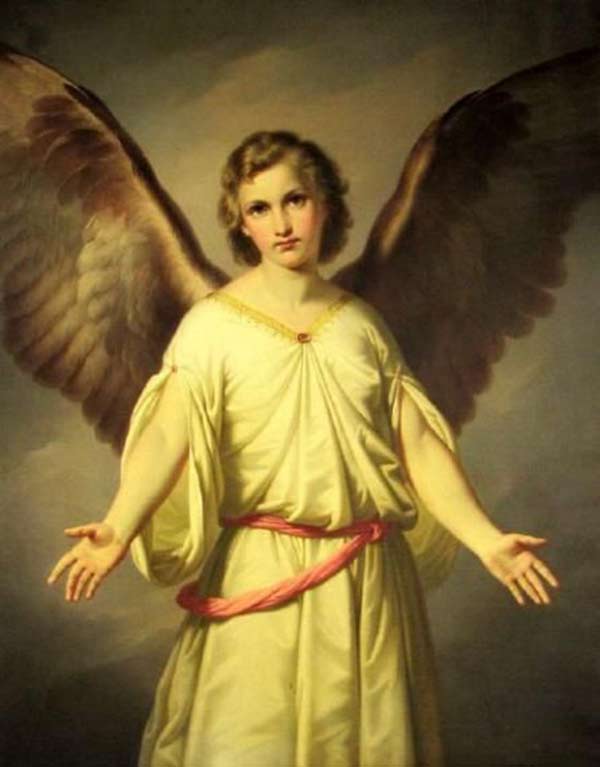
The archangel GabrielThe angels appear throughout the Scriptures. To mention just a few, already in the first book of the Bible, angels are placed at the entrance of the garden of Eden to guard the tree of life (Gen 3:24), and an angel appears to Jacob, telling him to return to the land of his birth (cf. Gen 31:11-13). Also in the Old Testament, an angel appears to Manoah’s wife announcing the birth of Samson (cf. Judg 13:3) and the Archangel Raphael accompanies the young Tobias on a journey in the book of Tobit. In the New Testament an angel appears to St Joseph in a dream to tell him that the child Mary is carrying is of the Holy Spirit (cf. Mt 1:20); and the Archangel Gabriel appears both to Zechariah to announce the birth of John the Baptist (cf. Lk 1:11) and to Mary to announce the birth of Jesus (cf. Lk 1:26-31). Finally, in the last book of the Bible, the book of Revelation, angels appear numerous times giving glory to God.

Angels are real, and they were created by God to give him glory in heaven as well as to perform various roles on earth, including looking after human beings as guardian angels. I don’t know how much the average person hears about angels these days, but I suspect, as you say, that it is not much. This is sad. Why is devotion to the angels so important?

A first reason is quite general but fundamental. In recent times mankind has tended to focus more and more on the visible world, on the here below, and to forget the spiritual, the supernatural. But it is in the realm of the spiritual where God himself is, and where our ultimate destiny, heaven, is. And it is in that realm too where angels, who are invisible, are. Remembering the angels and having devotion to them thus helps to lift our thoughts above and to be heavenly minded, not earthly minded (cf. Col 3:1-2).

What is more, all the angels, not only the guardian angels, are with us in the Church. St Thomas Aquinas writes: “It is manifest that both men and angels are ordained to one end, which is the glory of the divine fruition. Hence the Mystical Body of the Church consists not only of men but also of angels” (STh III, q. 8). So angels too form part of the Church. We can call on them to help us be the saints God wants us to be and so build up the body of Christ, the Church, helping others too to grow in holiness.

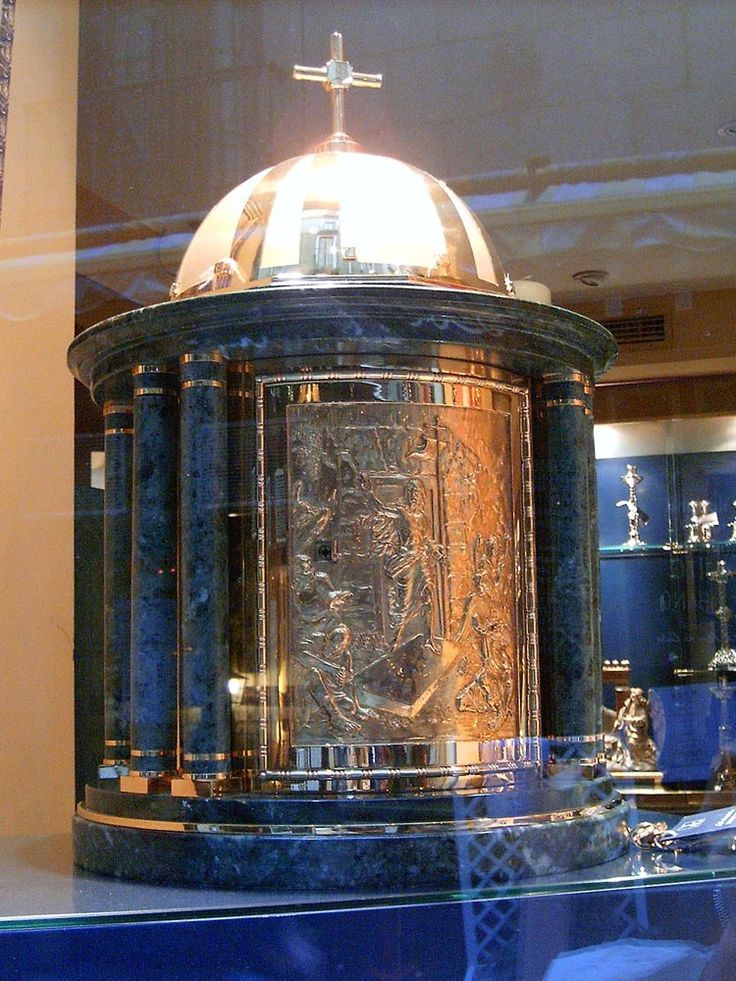
We should not forget either that the angels constantly adore Our Lord in the Tabernacle, where Christ is truly present. When we go into a church we can ask the angels to help us adore Our Lord as they do. We don’t see the angels but they are truly there, day and night. When we can’t be there ourselves, we can ask them to keep Our Lord company on our behalf. And, of course, during the celebration of Mass, the angels surround Our Lord when he becomes present in the host and in the chalice. Awareness of this helps us to be more supernatural, more spiritually minded.
Awareness of the existence of our guardian angel is also very helpful. When we are tempted to sin or are in any difficult set of circumstances we can ask our angel to help us get through the situation successfully. And being aware that our angel is always there watching us can be an added help to avoid doing things that we wouldn’t want our angel to see. St John Vianney, the Curé of Ars, writes: “If we did like St Remigius, we would never be angry. See, this saint, being questioned by a Father of the desert how he managed to be always in an even temper, replied: ‘I often consider that my guardian angel is always by my side’”. He also says: “The devil writes down our sins, our guardian angel all our merits. Labour so that guardian angel’s book may be full, and the devil’s empty.”

So yes, devotion to the angels is very important. Let us do all we can to foster it.

What is synodality?

Here is another of my recent answers in the Catholic Weekly to a question posed by a reader.

With the Synod of Bishops meeting on synodality fast approaching, I have been speaking with a group of friends and none of us is clear as to what the term synodality actually means. Can you help us?

To answer your question I will draw mainly on the International Theological Commission’s document “Synodality in the life and mission of the Church”, issued with the approval of Pope Francis on 2 March 2018.

The word “synod”, or synodos in Greek, is an ancient word in the tradition of the Church. It is composed of the preposition syn, meaning “with”, and the noun odos, or “path”. It thus means the path along which the People of God walk together.  writes that the Church is a “name standing for ‘walking together’” (Exp. In Psalm., 149, 1). In the early second century, St Ignatius of Antioch applied the term to the various local Churches, which are synodoi, or companions on the journey of the one universal Church (Ad Ephesios IX, 2).

From the beginning of the Church, the word “synod” was also applied to Church gatherings at various levels, both local and universal. Thus, one could speak of the Synod of Toledo, or the Synod of Nicaea. Here, as the document says, the word “synod” means the same as “council”. Since the Second Vatican Council, the word “synod” has been applied especially to the periodic gatherings of a selection of bishops from all over the world to meet with the Pope and advise him on certain issues. The Synod of Bishops which is to meet in October is one of these.

The word “synodality” is what the document calls a “neologism”, or newly-coined word. It is derived from the adjective “synodal” and has come to mean something like “walking together”. It is considered to be a constitutive dimension of the Church. While the Second Vatican Council did not use the word, the concept of synodality was at the heart of the Council’s teaching, coming to mean much the same as communion, or union with God the Blessed Trinity and union with others in the Church.

Synodality is also at the heart of the ecumenical commitment of the Church, because it represents an invitation to walk together on the path towards full communion with people of other faiths and because, when understood correctly, it offers a way of understanding the Church where legitimate differences find room in an exchange of gifts in the light of truth.

By way of summary, the document says that in the communion of the people of God with the Blessed Trinity “can be found the source, the form and the scope of synodality, inasmuch as it expresses the specific modus vivendi et operandi of the People of God in the responsible and ordered participation of all its members in discerning and putting into practice ways of fulfilling its mission.” (n. 43). In a nutshell, it means everyone working together toward a common goal.

The Church journeys together with Christ towards the end of time and towards the ends of the earth, in the union of the local Churches with each other and with the Church of Rome. The Church’s synodality is lived out especially in the service of her evangelising mission, with all the baptised involved as missionary disciples. This missionary aspect of synodality is emphasised numerous times in the document.

Consulting and listening to the faithful, including the lay faithful, who make up a great majority of the Church, before the hierarchy makes decisions, is an essential aspect of the synodal process. Nonetheless, while the hierarchy should listen to the faithful before making decisions, the task of making the decisions belongs to the pastors. As the document says, “Working things out is a synodal task; decision is a ministerial responsibility” (n. 69). This process should take place at all levels of the Church: local, regional and universal. And it should always be faithful to the deposit of faith received from Christ and respectful of the authority of pastors.

Thus, while pastors should listen to others before making decisions, synodality is not a democratic free-for-all where everyone has an equal say in decision-making. Pope Francis said as much in his homily on Pentecost Sunday 2023: “And the Synod now taking place is – and should be – a journey in accordance with the Spirit, not a Parliament for demanding rights and claiming needs in accordance with the agenda of the world, nor an occasion for following wherever the wind is blowing, but the opportunity to be docile to the breath of the Spirit.”

Was St Joseph assumed into heaven?

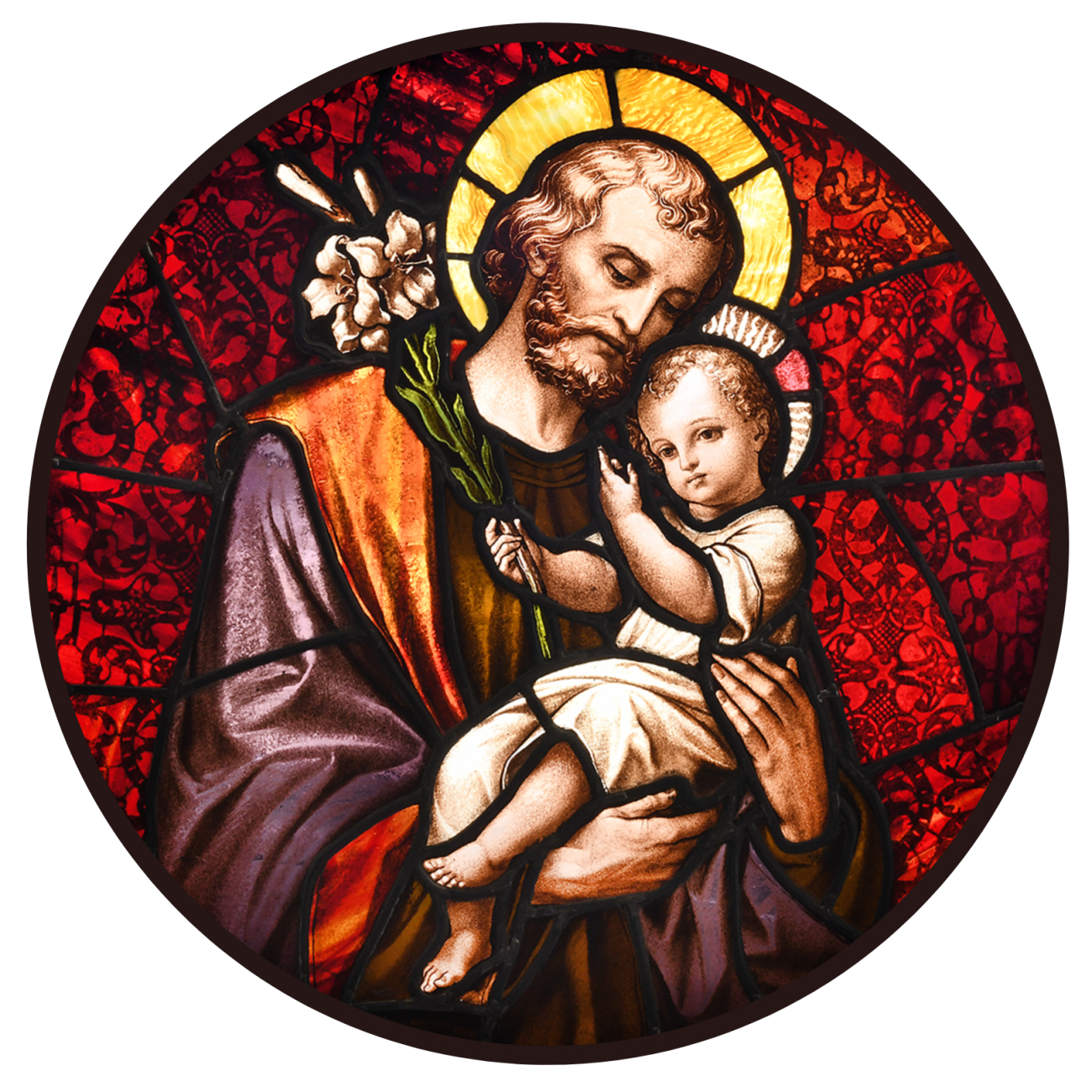
St Joseph with JesusSince St Joseph was so close to Our Lady and so holy, is it possible that he too was assumed body and soul into heaven when he died?  

Although we cannot be absolutely sure, there is a strong possibility that St Joseph too was assumed into heaven. As you say, he was very close to Our Lady, as her husband, and he was extremely holy, to a point where he may have been without sin, so God may have rewarded him in this way. What is more, the Holy Family was always very united on earth, and so it is likely that Jesus and Mary, who are in heaven in their bodies, would have wanted St Joseph to be there too in that way.

That St Joseph may have been assumed body and soul into heaven was certainly the view of a number of saints.

Among them was St Bernardine of Siena OFM (1380-1444), an Italian saint who did much to spread devotion to St Joseph. He said in one of his sermons: “We may piously believe, but not assert, that the Most Holy Son of God Jesus crowned his foster-father with the same privilege which he gave his Mother: that as he assumed her into heaven, bodily and glorious in soul, so also on the day when he arose he took Joseph up with him in the glory of the Resurrection. So that, as this glorious family, Christ, the Virgin and Joseph, had dwelt together on earth in the labours of life and in loving grace, so now they reign in heaven in loving glory of both body and soul.”

It is recorded that when St Bernardine was preaching in Padua that St Joseph was in heaven body and soul, a bright heavenly gold cross appeared above his head. This was taken as a sign that what he was saying was true. Blessed Bernardine de Bustis OFM (1450-1513 witnessed the event, and he also believed in the bodily assumption of St Joseph.

Another great saint who believed in St Joseph’s bodily assumption was the Doctor of the Church, St Francis de Sales (1567-1622). In the nineteenth of a series of spiritual conferences, he said that “we must nowise doubt that this glorious saint has great credit in heaven with him who has so favoured him as to raise him to it both body and soul; which is the more probable as we have no relic of him here below on earth; and it seems to me that no one can doubt this truth. For how could he who had been obedient to him all the time of his life, have refused this grace to St Joseph?”

In that conference, St Francis de Sales described what might have been said during the meeting of Jesus and St Joseph in the Limbo of the Fathers, where the holy souls of the Old Testament were waiting for Jesus’ death and resurrection when Jesus descended there after his death on the Cross. St Francis said: “And if it is true, as we must believe, that by virtue of the most Holy Sacrament which we receive, our bodies will rise again at the day of judgment, how can we doubt that our Lord caused to rise with him to heaven in body and soul the glorious St Joseph who had had the honour and the grace of carrying him so often in his blessed arms, in which our Lord took such pleasure? Oh, how many kisses he tenderly gave him with his blessed lips, to reward, in some measure, his labour!” So as to make his view abundantly clear, this great Doctor of the Church added: “St Joseph, then, is in heaven in body and soul; there is no doubt of it.”

St Leonard of Port Maurice OFM (1676-1751), an Italian preacher and writer who did much to promote the proclamation of the dogma of the Immaculate Conception, was another who believed in St Joseph’s bodily assumption.

Closer to our own time, Pope St John XXIII, in a homily on 26 May 1960, the feast of the Ascension, said that the Ascension of Jesus into heaven “corresponds, also, to those deceased from the Old Testament who were closer to Jesus. We name two who were the most intimate in his life: John the Baptist, the forerunner, and Joseph of Nazareth, his putative father and custodian. It corresponds to them, as well, and can be piously believed. It is an honour and a privilege for them to experience this admirable path to heaven.”

News and the place of Our Lady’s Assumption into Heaven

Greetings. Although over the years I have used this blog mainly to post meditations, I thought it would be worthwhile adding some of my weekly columns on matters of faith published in my question-and-answer column in Sydney’s The Catholic Weekly. Hence I now post an article on the ancient tradition that Our Lady was assumed into heaven from Jerusalem.

Also, I recently learned that the FeedSpot site has listed my blog among the 100 best Catholic Priest blogs and websites. Whatever that is worth! In any case, I hope you are finding my posts useful in some way. God bless you.

The place of Mary’s Assumption

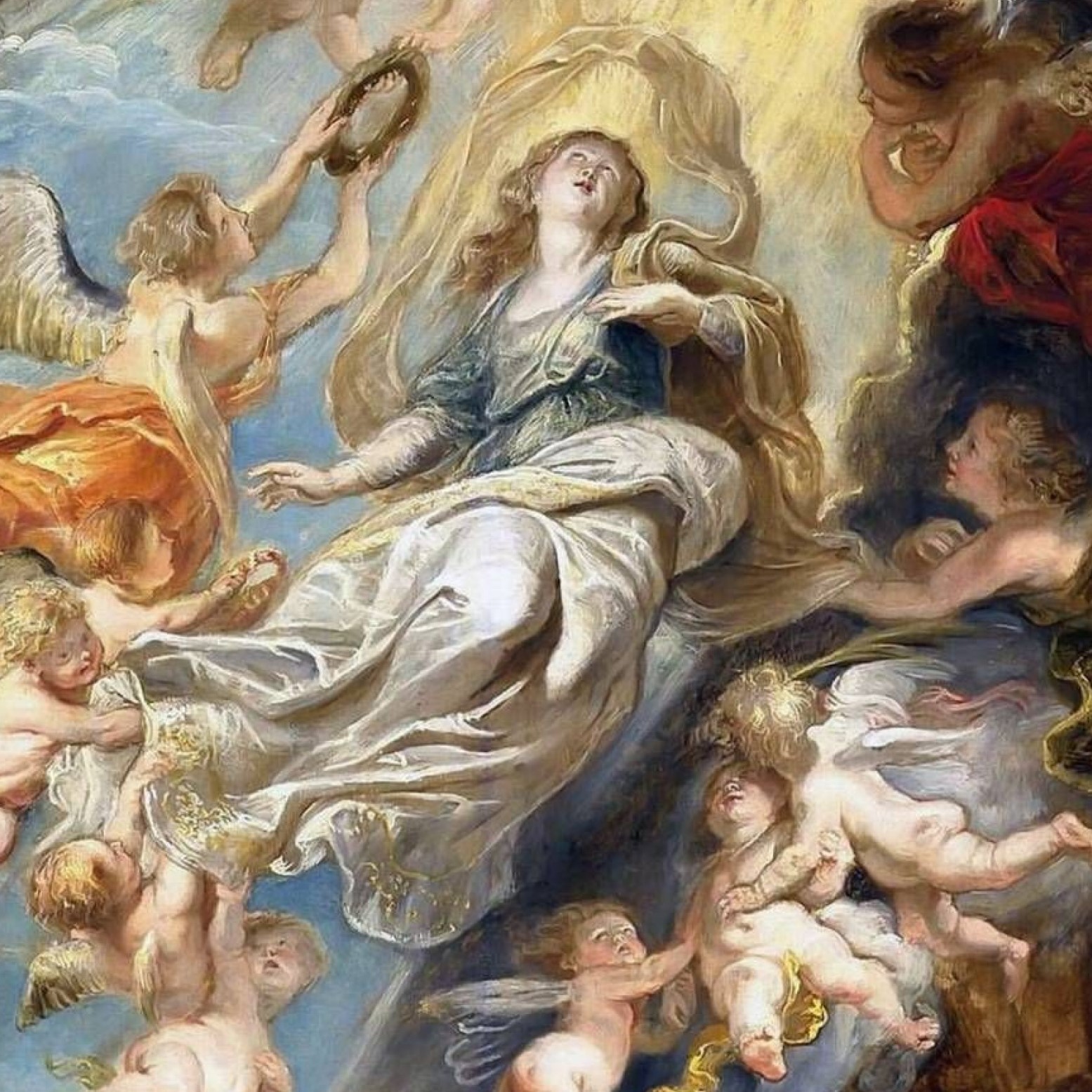
Assumption of Mary Rubens

The Assumption of the Blessed Virgin Mary

Do we know from where Our Lady was assumed into heaven? I know that she lived for some time with St John in Ephesus but I have also heard that there is a church in Jerusalem commemorating her assumption there.

There are two traditions in this regard. An ancient one says Mary was assumed into heaven in Jerusalem and a more recent one in Ephesus. Let us consider the earlier tradition, which has more credibility.

Among the Jerusalem traditions are some apocryphal writings generically known as Transitus Virginis, “the passing of the Virgin”, or Dormitio Mariae, “the falling asleep of Mary. It should be remembered that the expression “falling asleep” in the Scriptures and other writings usually means “dying”. According to these writings, when Our Lady was nearing the end of her life, the apostles gathered around her bed, and Our Lord himself came down and took her soul to heaven. Then the apostles placed her body in a tomb and three days later Our Lord returned and took her body to reunite it with her soul in heaven.

We find echoes of these traditions in several Fathers of the Church. St Gregory of Tours, who died in 594, is the first Western Father to write about the assumption. He hands down information he received from an apocryphal Greek text, which he knew in a fifth-century Latin translation. He describes how the apostles were with Our Lady when Our Lord came with his angels and took her soul, handing it over to the Archangel Michael. At dawn, the apostles lifted her body onto a pallet, laid it in a tomb, and kept watch over it until Our Lord came and ordered it to be carried up to heaven.

St John Damascene, who died in Jerusalem in the middle of the eighth century, writes in a similar vein. He says Mary died in the Upper Room, after which the apostles prepared her body for burial and carried it on their shoulders in procession from Mount Zion to the Garden of Gethsemane, accompanied by the angels and the whole Church.

Church of the Dormition, Jerusalem

Today there are two churches in Jerusalem which commemorate these events. The Basilica of the Dormition of Mary, where Our Lady is believed to have died, is located next to the Cenacle on Mount Zion, a hill on the southwest edge of Jerusalem, just outside the walls of the Old City. In the second half of the fourth century, a basilica was built there called Holy Zion, and it was considered to be the mother of all churches. It included the Cenacle, or Upper Room, and also the place of the “transit of Our Lady”. The basilica was destroyed and rebuilt several times in the following centuries, until only the Cenacle itself remained standing, where it is today. The present Basilica of the Dormition was built next to the Cenacle, starting in 1910, by the German Emperor Wilhelm II, who also built a Benedictine abbey alongside it.

The Basilica is round in shape and has on its upper floor the main church, crowned by a great dome adorned with beautiful mosaics. The sanctuary is in an apse with a half dome above it, and has a mosaic of the Virgin holding the Child Jesus. On the lower floor is a crypt with a statue of the Blessed Virgin, lying as though asleep, beneath a cupola supported by pillars.

The other church, where Our Lady’s body was believed to have been laid before it was assumed into heaven, is the Basilica of the Tomb of Mary, just to the north of the Garden of Gethsemane, across the Kidron Valley from Jerusalem. It is about a 25-minute walk from the Cenacle. It is called the Church of the Assumption by the Greek Orthodox and other Orthodox Churches who have certain rights over it.

The tomb in the Basilica is two long flights of stairs below the present street level, owing to the fact that the Kidron riverbed has risen substantially over the centuries and also to the fact that the building today was probably the crypt of the earlier basilica, built in the fourth or fifth century. Archaeological excavations in the 1970s revealed that the tomb where Our Lady’s body was laid was part of a first-century burial site. The central focus of the Basilica is a small chapel over the place where, according to the tradition, Our Lady’s tomb was carved out of the rock.

What is a Synod of Bishops?

With the Synod of Bishops now meeting in Rome from October 4-25, many people are asking what a Synod is and whether it can change Catholic teaching, for example on giving Communion to people who have been divorced and are now remarried outside the Church. Here is an answer to those questions, published recently in Australian Catholic newspapers.

Can a synod change Church doctrine?

Some of my friends have expressed the belief that the October synod of bishops in Rome will allow divorced and remarried Catholics to receive Communion. Is this possible? Also, what exactly is a synod?

 The short answer to your first question is no, it is not possible. The answer to your second question will explain why.

The synod of bishops is something relatively new in the Church, having been instituted by Pope Paul VI on 15 September 1965 in the Motu Proprio Apostolica Solicitudo. A month and a half later the Second Vatican Council’s Decree Christus Dominus on the Pastoral Office of Bishops spoke of synods and referred to Pope Paul’s document in a footnote (cf. CD, n. 5).

A series of subsequent documents gave norms for synods and finally the Code of Canon Law of 1983 summarised them in canons 342-348. Canon 342 tells us what a synod is: “The synod of bishops is a group of bishops selected from different parts of the world, who meet together at specified times to promote the close relationship between the Roman Pontiff and the bishops. These bishops, by their counsel, assist the Roman Pontiff in the defence and development of faith and morals and in the preservation and strengthening of ecclesiastical discipline.” As this canon says, the bishops in a synod assist the Pope “by their counsel” in his teaching role. They do not teach in their own right.

In the following canon we find a further answer to your question: “The function of the synod of Bishops is to discuss the matters proposed to it and set forth recommendations. It is not its function to settle matters or to draw up decrees, unless the Roman Pontiff has given it deliberative power in certain cases; in this event, it rests with the Roman Pontiff to ratify the decisions of the synod” (Can. 343). Again, the bishops’ role is to recommend, not to teach.

This gathering of bishops from all over the world is convened by the Pope to discuss the proposed topic. Some of the bishops are chosen by their respective bishops’ conferences, some attend because of the office they hold in the Church, and others are nominated by the Pope. Each bishop is given an opportunity to speak for a short, specified time on any aspect of the topic he chooses. The bishops also break up into small groups, normally according to their respective languages, to discuss the question. At the end of the synod they vote on a series of propositions which reflect their views, and these are given to the Holy Father for his consideration.

After the synod some of the bishops who took part are selected to prepare a draft of a document that the Pope might use in preparing his own document on the topic. This document, customarily in the form of an Apostolic Exhortation, is issued by the Pope himself and is a form of ordinary papal magisterium.

In recent times synods have been held approximately every three years. The last one, in 2012, was on the theme of the new evangelisation and was followed by Pope Francis’ Apostolic Exhortation Evangelii gaudium in 2013. The one before that on the Word of God was held in 2008 and was followed by Pope Benedict XVI’s Apostolic Exhortation Verbum Domini in 2010.

The present synod will be the fourteenth ordinary general assembly of the synod of bishops. There have also been extraordinary general assemblies, like the one on the family last year to prepare for the present synod, and also special general assemblies, like those of the bishops of the larger regions of the world to prepare for the Jubilee Year 2000.

It should be remembered that the present ordinary synod on the family is not the first one on this topic. The first one was held in 1980 and was followed by Pope St John Paul II’s Apostolic Exhortation Familiaris consortio. In that document Pope John Paul made clear that those who are divorced and remarried civilly are to be welcomed into the life of the Church but they may not be admitted to Eucharistic Communion (cf. n. 84). Pope Francis will not change that teaching.

What we should all do is pray very much for the fruits of this important synod, which affects all of us very directly.