Monthly Archives: August 2023

Was St Joseph assumed into heaven?

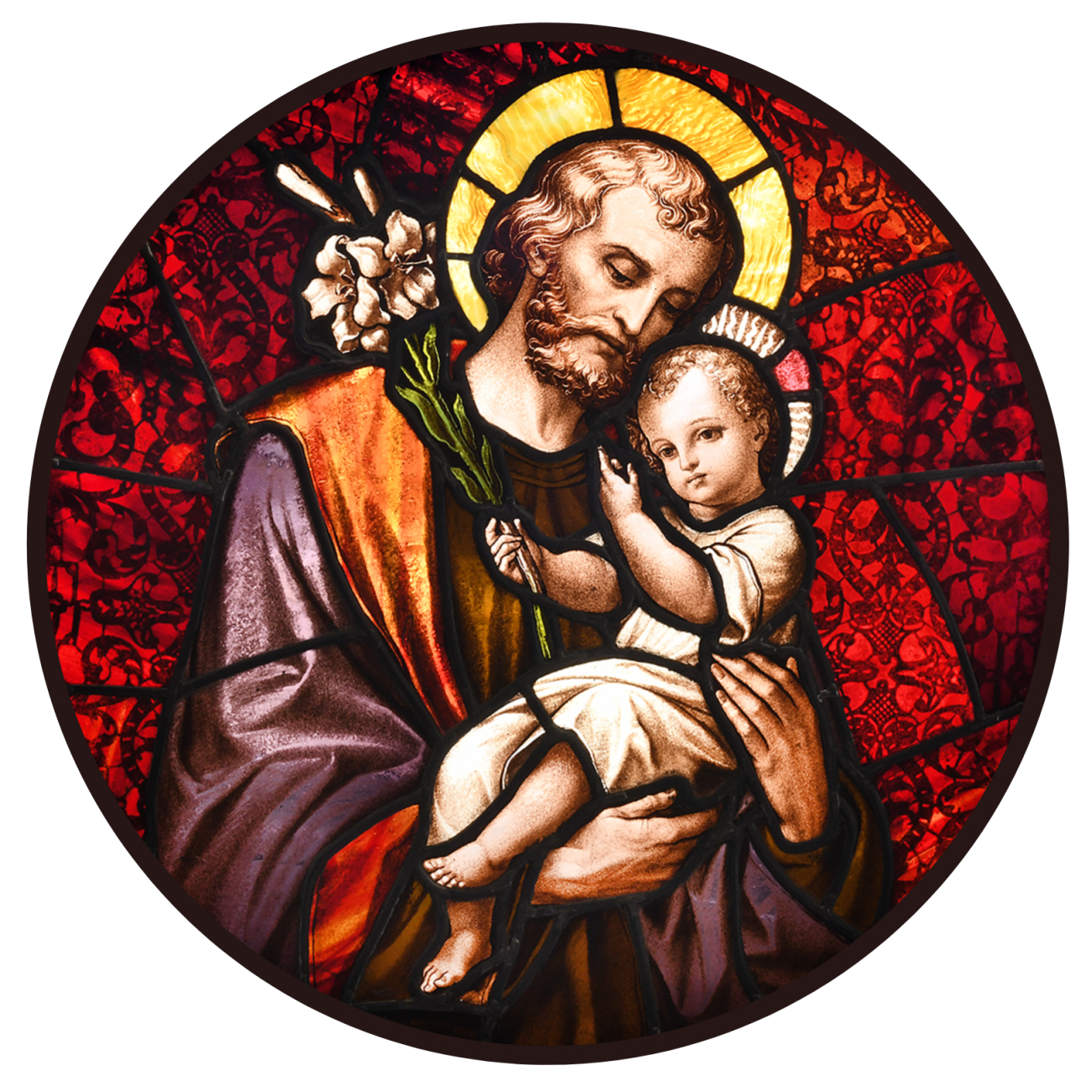
St Joseph with JesusSince St Joseph was so close to Our Lady and so holy, is it possible that he too was assumed body and soul into heaven when he died?  

Although we cannot be absolutely sure, there is a strong possibility that St Joseph too was assumed into heaven. As you say, he was very close to Our Lady, as her husband, and he was extremely holy, to a point where he may have been without sin, so God may have rewarded him in this way. What is more, the Holy Family was always very united on earth, and so it is likely that Jesus and Mary, who are in heaven in their bodies, would have wanted St Joseph to be there too in that way.

That St Joseph may have been assumed body and soul into heaven was certainly the view of a number of saints.

Among them was St Bernardine of Siena OFM (1380-1444), an Italian saint who did much to spread devotion to St Joseph. He said in one of his sermons: “We may piously believe, but not assert, that the Most Holy Son of God Jesus crowned his foster-father with the same privilege which he gave his Mother: that as he assumed her into heaven, bodily and glorious in soul, so also on the day when he arose he took Joseph up with him in the glory of the Resurrection. So that, as this glorious family, Christ, the Virgin and Joseph, had dwelt together on earth in the labours of life and in loving grace, so now they reign in heaven in loving glory of both body and soul.”

It is recorded that when St Bernardine was preaching in Padua that St Joseph was in heaven body and soul, a bright heavenly gold cross appeared above his head. This was taken as a sign that what he was saying was true. Blessed Bernardine de Bustis OFM (1450-1513 witnessed the event, and he also believed in the bodily assumption of St Joseph.

Another great saint who believed in St Joseph’s bodily assumption was the Doctor of the Church, St Francis de Sales (1567-1622). In the nineteenth of a series of spiritual conferences, he said that “we must nowise doubt that this glorious saint has great credit in heaven with him who has so favoured him as to raise him to it both body and soul; which is the more probable as we have no relic of him here below on earth; and it seems to me that no one can doubt this truth. For how could he who had been obedient to him all the time of his life, have refused this grace to St Joseph?”

In that conference, St Francis de Sales described what might have been said during the meeting of Jesus and St Joseph in the Limbo of the Fathers, where the holy souls of the Old Testament were waiting for Jesus’ death and resurrection when Jesus descended there after his death on the Cross. St Francis said: “And if it is true, as we must believe, that by virtue of the most Holy Sacrament which we receive, our bodies will rise again at the day of judgment, how can we doubt that our Lord caused to rise with him to heaven in body and soul the glorious St Joseph who had had the honour and the grace of carrying him so often in his blessed arms, in which our Lord took such pleasure? Oh, how many kisses he tenderly gave him with his blessed lips, to reward, in some measure, his labour!” So as to make his view abundantly clear, this great Doctor of the Church added: “St Joseph, then, is in heaven in body and soul; there is no doubt of it.”

St Leonard of Port Maurice OFM (1676-1751), an Italian preacher and writer who did much to promote the proclamation of the dogma of the Immaculate Conception, was another who believed in St Joseph’s bodily assumption.

Closer to our own time, Pope St John XXIII, in a homily on 26 May 1960, the feast of the Ascension, said that the Ascension of Jesus into heaven “corresponds, also, to those deceased from the Old Testament who were closer to Jesus. We name two who were the most intimate in his life: John the Baptist, the forerunner, and Joseph of Nazareth, his putative father and custodian. It corresponds to them, as well, and can be piously believed. It is an honour and a privilege for them to experience this admirable path to heaven.”
News and the place of Our Lady’s Assumption into Heaven

Greetings. Although over the years I have used this blog mainly to post meditations, I thought it would be worthwhile adding some of my weekly columns on matters of faith published in my question-and-answer column in Sydney’s The Catholic Weekly. Hence I now post an article on the ancient tradition that Our Lady was assumed into heaven from Jerusalem.

Also, I recently learned that the FeedSpot site has listed my blog among the 100 best Catholic Priest blogs and websites. Whatever that is worth! In any case, I hope you are finding my posts useful in some way. God bless you.

The place of Mary’s Assumption

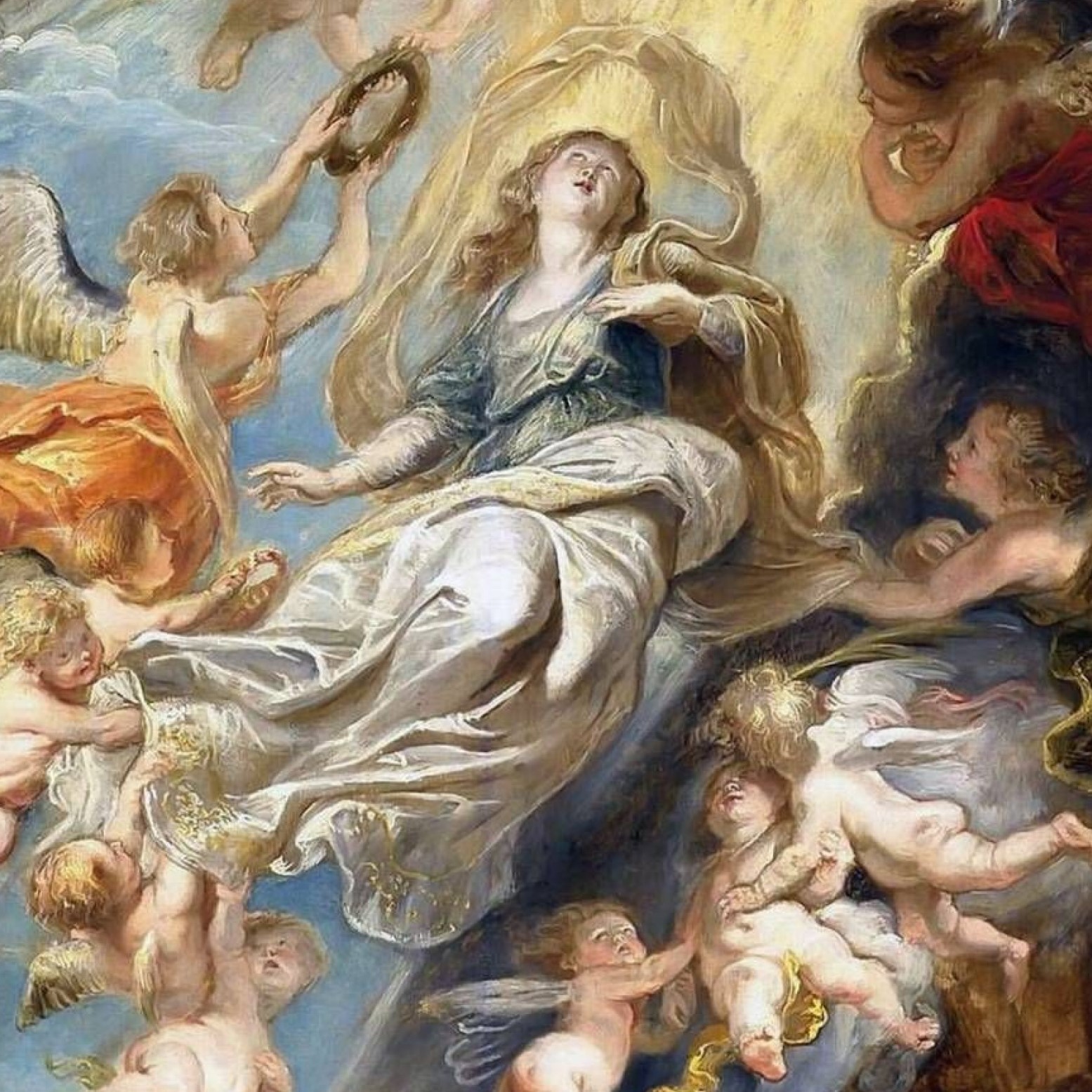
Assumption of Mary Rubens

The Assumption of the Blessed Virgin Mary

Do we know from where Our Lady was assumed into heaven? I know that she lived for some time with St John in Ephesus but I have also heard that there is a church in Jerusalem commemorating her assumption there.

There are two traditions in this regard. An ancient one says Mary was assumed into heaven in Jerusalem and a more recent one in Ephesus. Let us consider the earlier tradition, which has more credibility.

Among the Jerusalem traditions are some apocryphal writings generically known as Transitus Virginis, “the passing of the Virgin”, or Dormitio Mariae, “the falling asleep of Mary. It should be remembered that the expression “falling asleep” in the Scriptures and other writings usually means “dying”. According to these writings, when Our Lady was nearing the end of her life, the apostles gathered around her bed, and Our Lord himself came down and took her soul to heaven. Then the apostles placed her body in a tomb and three days later Our Lord returned and took her body to reunite it with her soul in heaven.

We find echoes of these traditions in several Fathers of the Church. St Gregory of Tours, who died in 594, is the first Western Father to write about the assumption. He hands down information he received from an apocryphal Greek text, which he knew in a fifth-century Latin translation. He describes how the apostles were with Our Lady when Our Lord came with his angels and took her soul, handing it over to the Archangel Michael. At dawn, the apostles lifted her body onto a pallet, laid it in a tomb, and kept watch over it until Our Lord came and ordered it to be carried up to heaven.

St John Damascene, who died in Jerusalem in the middle of the eighth century, writes in a similar vein. He says Mary died in the Upper Room, after which the apostles prepared her body for burial and carried it on their shoulders in procession from Mount Zion to the Garden of Gethsemane, accompanied by the angels and the whole Church.

Church of the Dormition, Jerusalem

Today there are two churches in Jerusalem which commemorate these events. The Basilica of the Dormition of Mary, where Our Lady is believed to have died, is located next to the Cenacle on Mount Zion, a hill on the southwest edge of Jerusalem, just outside the walls of the Old City. In the second half of the fourth century, a basilica was built there called Holy Zion, and it was considered to be the mother of all churches. It included the Cenacle, or Upper Room, and also the place of the “transit of Our Lady”. The basilica was destroyed and rebuilt several times in the following centuries, until only the Cenacle itself remained standing, where it is today. The present Basilica of the Dormition was built next to the Cenacle, starting in 1910, by the German Emperor Wilhelm II, who also built a Benedictine abbey alongside it.

The Basilica is round in shape and has on its upper floor the main church, crowned by a great dome adorned with beautiful mosaics. The sanctuary is in an apse with a half dome above it, and has a mosaic of the Virgin holding the Child Jesus. On the lower floor is a crypt with a statue of the Blessed Virgin, lying as though asleep, beneath a cupola supported by pillars.

The other church, where Our Lady’s body was believed to have been laid before it was assumed into heaven, is the Basilica of the Tomb of Mary, just to the north of the Garden of Gethsemane, across the Kidron Valley from Jerusalem. It is about a 25-minute walk from the Cenacle. It is called the Church of the Assumption by the Greek Orthodox and other Orthodox Churches who have certain rights over it.

The tomb in the Basilica is two long flights of stairs below the present street level, owing to the fact that the Kidron riverbed has risen substantially over the centuries and also to the fact that the building today was probably the crypt of the earlier basilica, built in the fourth or fifth century. Archaeological excavations in the 1970s revealed that the tomb where Our Lady’s body was laid was part of a first-century burial site. The central focus of the Basilica is a small chapel over the place where, according to the tradition, Our Lady’s tomb was carved out of the rock.

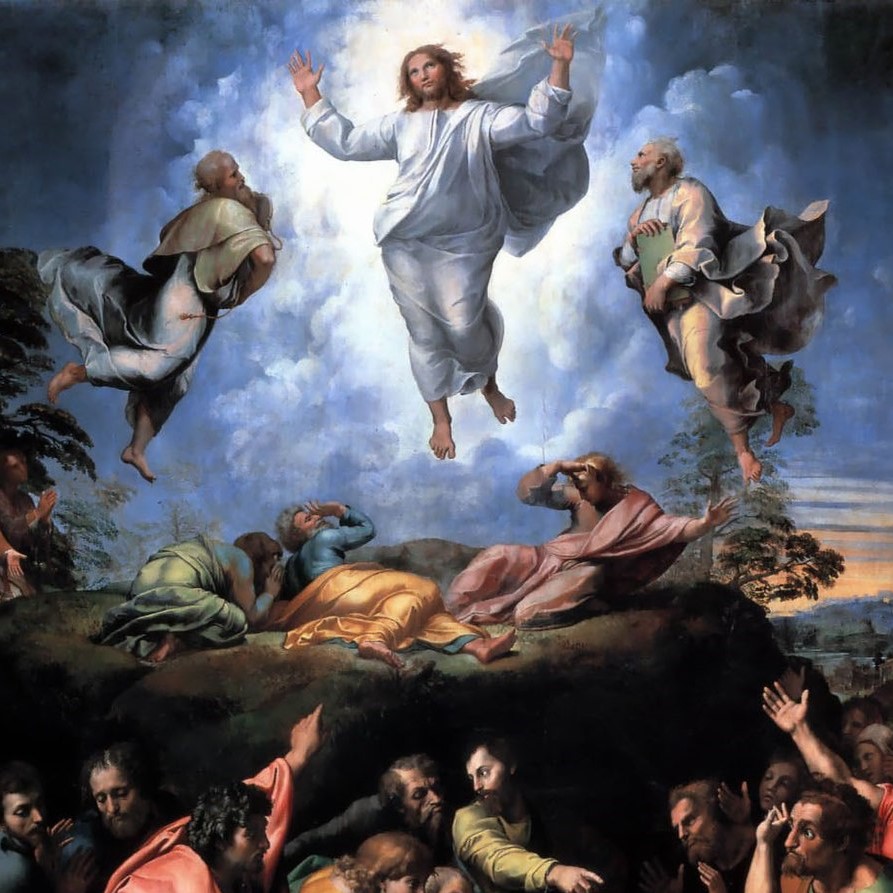
Lessons from the Transfiguration

Transfiguration by Raphael

The Transfiguration of our Lord

Our Lord’s Transfiguration on Mount Tabor can teach us many lessons. In this meditation, we use passages from Scripture to consider some of them:

  • The climbing of the mountain calls to mind the difficulties in our own life in climbing the mountain of holiness
  • Seeing Christ transfigured in his divinity is a reminder that we too will see him transfigured in glory in heaven
  • This should spur us on to lift our thoughts above to the goal of life, especially when we are bogged down in the here and now
  • When Peter says “It is well for us to be here” we are reminded that we should often say the same thing, in good times and in bad
  • When the Father says, “This is my beloved Son with whom I am well pleased; listen to him” we should listen to Christ often:  in our prayer, in our conscience throughout the day, in the Scriptures, in Mass…
  • Like the apostles, we should share our faith with the many others who do not know Christ