Tag Archives: John Flader

What is synodality?

Here is another of my recent answers in the Catholic Weekly to a question posed by a reader.

With the Synod of Bishops meeting on synodality fast approaching, I have been speaking with a group of friends and none of us is clear as to what the term synodality actually means. Can you help us?

To answer your question I will draw mainly on the International Theological Commission’s document “Synodality in the life and mission of the Church”, issued with the approval of Pope Francis on 2 March 2018.

The word “synod”, or synodos in Greek, is an ancient word in the tradition of the Church. It is composed of the preposition syn, meaning “with”, and the noun odos, or “path”. It thus means the path along which the People of God walk together.  writes that the Church is a “name standing for ‘walking together’” (Exp. In Psalm., 149, 1). In the early second century, St Ignatius of Antioch applied the term to the various local Churches, which are synodoi, or companions on the journey of the one universal Church (Ad Ephesios IX, 2).

From the beginning of the Church, the word “synod” was also applied to Church gatherings at various levels, both local and universal. Thus, one could speak of the Synod of Toledo, or the Synod of Nicaea. Here, as the document says, the word “synod” means the same as “council”. Since the Second Vatican Council, the word “synod” has been applied especially to the periodic gatherings of a selection of bishops from all over the world to meet with the Pope and advise him on certain issues. The Synod of Bishops which is to meet in October is one of these.

The word “synodality” is what the document calls a “neologism”, or newly-coined word. It is derived from the adjective “synodal” and has come to mean something like “walking together”. It is considered to be a constitutive dimension of the Church. While the Second Vatican Council did not use the word, the concept of synodality was at the heart of the Council’s teaching, coming to mean much the same as communion, or union with God the Blessed Trinity and union with others in the Church.

Synodality is also at the heart of the ecumenical commitment of the Church, because it represents an invitation to walk together on the path towards full communion with people of other faiths and because, when understood correctly, it offers a way of understanding the Church where legitimate differences find room in an exchange of gifts in the light of truth.

By way of summary, the document says that in the communion of the people of God with the Blessed Trinity “can be found the source, the form and the scope of synodality, inasmuch as it expresses the specific modus vivendi et operandi of the People of God in the responsible and ordered participation of all its members in discerning and putting into practice ways of fulfilling its mission.” (n. 43). In a nutshell, it means everyone working together toward a common goal.

The Church journeys together with Christ towards the end of time and towards the ends of the earth, in the union of the local Churches with each other and with the Church of Rome. The Church’s synodality is lived out especially in the service of her evangelising mission, with all the baptised involved as missionary disciples. This missionary aspect of synodality is emphasised numerous times in the document.

Consulting and listening to the faithful, including the lay faithful, who make up a great majority of the Church, before the hierarchy makes decisions, is an essential aspect of the synodal process. Nonetheless, while the hierarchy should listen to the faithful before making decisions, the task of making the decisions belongs to the pastors. As the document says, “Working things out is a synodal task; decision is a ministerial responsibility” (n. 69). This process should take place at all levels of the Church: local, regional and universal. And it should always be faithful to the deposit of faith received from Christ and respectful of the authority of pastors.

Thus, while pastors should listen to others before making decisions, synodality is not a democratic free-for-all where everyone has an equal say in decision-making. Pope Francis said as much in his homily on Pentecost Sunday 2023: “And the Synod now taking place is – and should be – a journey in accordance with the Spirit, not a Parliament for demanding rights and claiming needs in accordance with the agenda of the world, nor an occasion for following wherever the wind is blowing, but the opportunity to be docile to the breath of the Spirit.”
News and the place of Our Lady’s Assumption into Heaven

Greetings. Although over the years I have used this blog mainly to post meditations, I thought it would be worthwhile adding some of my weekly columns on matters of faith published in my question-and-answer column in Sydney’s The Catholic Weekly. Hence I now post an article on the ancient tradition that Our Lady was assumed into heaven from Jerusalem.

Also, I recently learned that the FeedSpot site has listed my blog among the 100 best Catholic Priest blogs and websites. Whatever that is worth! In any case, I hope you are finding my posts useful in some way. God bless you.

The place of Mary’s Assumption

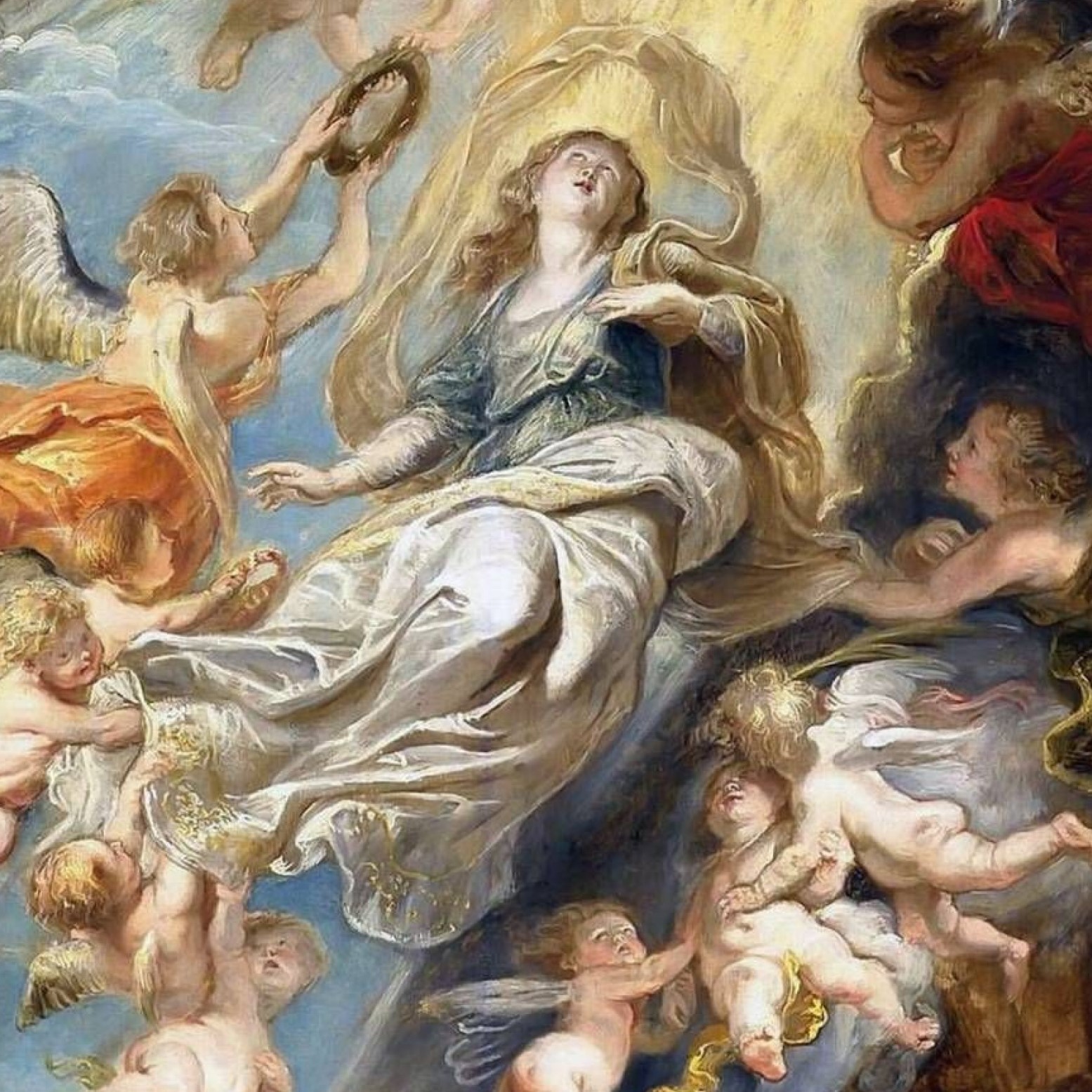
Assumption of Mary Rubens

The Assumption of the Blessed Virgin Mary

Do we know from where Our Lady was assumed into heaven? I know that she lived for some time with St John in Ephesus but I have also heard that there is a church in Jerusalem commemorating her assumption there.

There are two traditions in this regard. An ancient one says Mary was assumed into heaven in Jerusalem and a more recent one in Ephesus. Let us consider the earlier tradition, which has more credibility.

Among the Jerusalem traditions are some apocryphal writings generically known as Transitus Virginis, “the passing of the Virgin”, or Dormitio Mariae, “the falling asleep of Mary. It should be remembered that the expression “falling asleep” in the Scriptures and other writings usually means “dying”. According to these writings, when Our Lady was nearing the end of her life, the apostles gathered around her bed, and Our Lord himself came down and took her soul to heaven. Then the apostles placed her body in a tomb and three days later Our Lord returned and took her body to reunite it with her soul in heaven.

We find echoes of these traditions in several Fathers of the Church. St Gregory of Tours, who died in 594, is the first Western Father to write about the assumption. He hands down information he received from an apocryphal Greek text, which he knew in a fifth-century Latin translation. He describes how the apostles were with Our Lady when Our Lord came with his angels and took her soul, handing it over to the Archangel Michael. At dawn, the apostles lifted her body onto a pallet, laid it in a tomb, and kept watch over it until Our Lord came and ordered it to be carried up to heaven.

St John Damascene, who died in Jerusalem in the middle of the eighth century, writes in a similar vein. He says Mary died in the Upper Room, after which the apostles prepared her body for burial and carried it on their shoulders in procession from Mount Zion to the Garden of Gethsemane, accompanied by the angels and the whole Church.

Church of the Dormition, Jerusalem

Today there are two churches in Jerusalem which commemorate these events. The Basilica of the Dormition of Mary, where Our Lady is believed to have died, is located next to the Cenacle on Mount Zion, a hill on the southwest edge of Jerusalem, just outside the walls of the Old City. In the second half of the fourth century, a basilica was built there called Holy Zion, and it was considered to be the mother of all churches. It included the Cenacle, or Upper Room, and also the place of the “transit of Our Lady”. The basilica was destroyed and rebuilt several times in the following centuries, until only the Cenacle itself remained standing, where it is today. The present Basilica of the Dormition was built next to the Cenacle, starting in 1910, by the German Emperor Wilhelm II, who also built a Benedictine abbey alongside it.

The Basilica is round in shape and has on its upper floor the main church, crowned by a great dome adorned with beautiful mosaics. The sanctuary is in an apse with a half dome above it, and has a mosaic of the Virgin holding the Child Jesus. On the lower floor is a crypt with a statue of the Blessed Virgin, lying as though asleep, beneath a cupola supported by pillars.

The other church, where Our Lady’s body was believed to have been laid before it was assumed into heaven, is the Basilica of the Tomb of Mary, just to the north of the Garden of Gethsemane, across the Kidron Valley from Jerusalem. It is about a 25-minute walk from the Cenacle. It is called the Church of the Assumption by the Greek Orthodox and other Orthodox Churches who have certain rights over it.

The tomb in the Basilica is two long flights of stairs below the present street level, owing to the fact that the Kidron riverbed has risen substantially over the centuries and also to the fact that the building today was probably the crypt of the earlier basilica, built in the fourth or fifth century. Archaeological excavations in the 1970s revealed that the tomb where Our Lady’s body was laid was part of a first-century burial site. The central focus of the Basilica is a small chapel over the place where, according to the tradition, Our Lady’s tomb was carved out of the rock.

Lessons from the Transfiguration

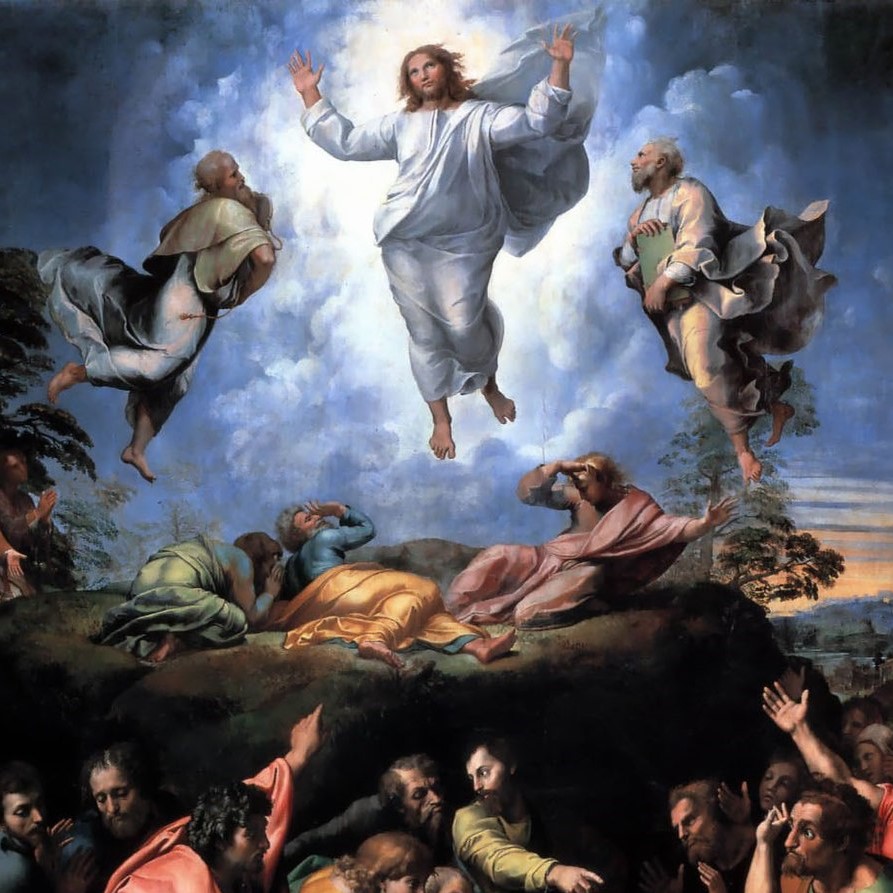
Transfiguration by Raphael

The Transfiguration of our Lord

Our Lord’s Transfiguration on Mount Tabor can teach us many lessons. In this meditation, we use passages from Scripture to consider some of them:

  • The climbing of the mountain calls to mind the difficulties in our own life in climbing the mountain of holiness
  • Seeing Christ transfigured in his divinity is a reminder that we too will see him transfigured in glory in heaven
  • This should spur us on to lift our thoughts above to the goal of life, especially when we are bogged down in the here and now
  • When Peter says “It is well for us to be here” we are reminded that we should often say the same thing, in good times and in bad
  • When the Father says, “This is my beloved Son with whom I am well pleased; listen to him” we should listen to Christ often:  in our prayer, in our conscience throughout the day, in the Scriptures, in Mass…
  • Like the apostles, we should share our faith with the many others who do not know Christ

You too have a vocation

We all have vocation

We tend to think that only priests and religious have a vocation. But we all have a calling from God, a vocation, to carry out a particular mission in life. In this meditation we use texts from Scripture, Pope Francis, St John Henry Newman and St Josemaria Escriva to consider how:

  • God has created every single person to fulfil a particular mission in the world
  • He has called each one of us from all eternity to carry out that task
  • Many great things depend on whether we fulfil that mission or not
  • Through fidelity to our vocation, we can help many people find God and make this world a better place

Love for Mary, our Mother

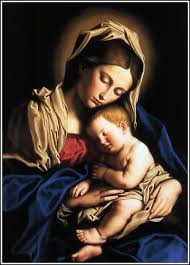
Our Blessed Mother with the child Jesus

Before he died on the Cross, Jesus said to St John and to all of us: “Behold your Mother.” Mary is truly the mother of everyone. In this meditation we use texts of Scripture, St Bernard and St Josemaria to consider how:

  • In conceiving Jesus in her womb, and later giving birth to him in Bethlehem, Mary became the mother of all the members of Christ’s Mystical Body, the Church
  • At Calvary Mary suffered unspeakably with Jesus for all mankind and this moves her to love us all the more
  • Mary draws sinners to Jesus
  • Mary exercises her motherly role with the apostles and with all of us
  • Mary intercedes for us before Jesus in a powerful way
  • We can take Mary into our own keeping and love her, as St John did, through the various Marian prayers and customs, especially the rosary

Lessons from the Cross

Jesus crucified

Our Lord, Jesus Christ, crucified.

Jesus’ passion and death teach us many lessons.  In this meditation we use texts from Scripture and St Thomas Aquinas to consider some of the many virtues Christ teaches us from the Cross:

  • Charity
  • Humility
  • Patience
  • Obedience
  • Fortitude
  • Perseverance
  • Joy

The sorrows and joys of St Joseph

Pope Gregory XVI, who was Pope from 1831 to 1846, instituted the custom of dedicating the seven Sundays preceding the feast of St Joseph on March 19 to that great saint, and of meditating especially on his seven sorrows and joys. In this meditation we use the Gospels of Matthew and Luke to consider these themes.

Prayer for the holy souls

A depiction of purgatory

November is the month in which the Church traditionally intensifies her prayers for the souls in Purgatory. But every day should be for us a day of prayer for the holy souls. There are many souls there now suffering greatly but at the same time exceedingly happy. In this meditation we use texts from Scripture, the Catechism and saints to consider how:

  • The holy souls suffer from the pains of sense, likened to fire, and of loss, of being deprived of union with God
  • The souls in Purgatory are happier than we are on earth, because they are assured of heaven and they love God more than we do
  • We can help the souls in Purgatory by offering our prayers, works and sufferings for them
  • The souls in Purgatory are powerful intercessors for us and we can entrust our intentions to them
  • The holy souls should be able to consider us their “good friends”

One with Christ

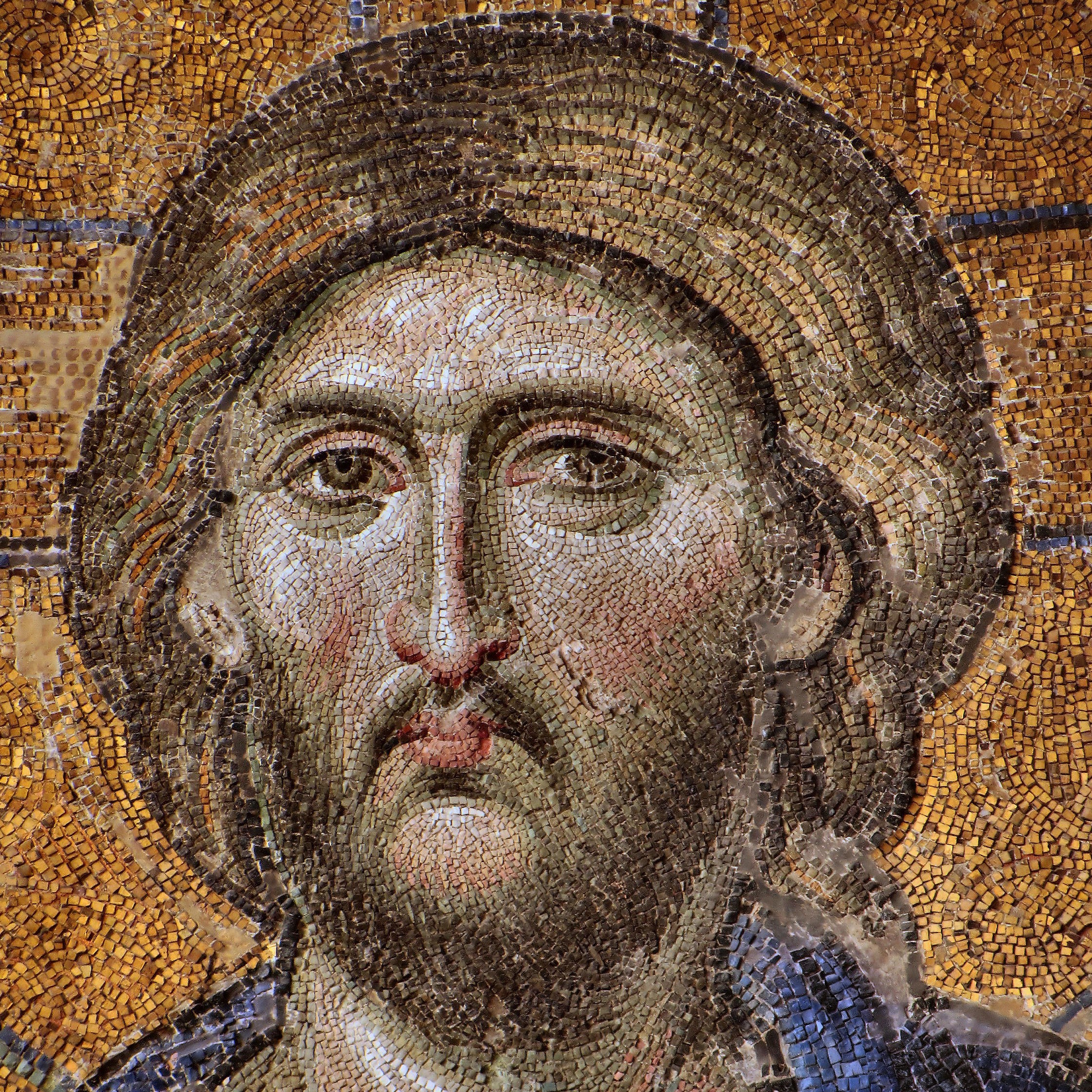
A depiction of our Lord, Jesus Christ

Through Baptism we become members of the Mystical Body of Christ. We become one with him. He lives in us and we live in him. In this meditation we use texts of Scripture,  St John Eudes, St Josemaria Escriva and St John Paul II to consider how:

  • We can ask Jesus to let us see with his eyes, hear with his ears, love with his heart and think with his mind
  • We should act in such a way as to make Christ present to those around us
  • We can grow in union with Christ through reading and meditating on the Gospels, receiving him well in Holy Communion, acting as he would act in our situation, and struggling to overcome the defects which obscure his image in us

Jesus and the Samaritan woman

Jesus and the Samaritan woman

Jesus and the Samaritan woman at the well, a depiction

The encounter of Jesus with the Samaritan woman at the well teaches us many lessons. In this meditation we use the passage related by St John to consider how:

  • Jesus in his Providence arranged for the meeting to take place so that he could reveal himself to the Samaritan woman
  • Jesus begins his conversation not by preaching but by asking for a drink of water
  • Like the woman, we too have received “the gift of God”, the gift of grace, of faith, of formation, and we should put it to good use
  • The woman speaks to others of Jesus and brings them to him
  • We too should love all souls, of all backgrounds and religions, and help them come to know and love  Jesus