Author Archives: frjflader

Lessons from Holy Week

Holy Week should be holy not only in its name and in the events we commemorate, but in the way we live it. In this meditation we consider the numerous lessons we can learn from this week and how we can put them into practice. We will consider:

  • Palm Sunday – praising God by our life
  • Holy Thursday – frequenting the sacrament of Penance
  • Washing of the feet – spirit of service
  • Institution of the Eucharist – love for the Eucharist and prayer for priests
  • Prayer in the garden – spirit of prayer
  • Passion and death – spirit of penance
  • Jesus gives us his mother – love for Mary
  • Resurrection – joy and hope

The spirit of Lent

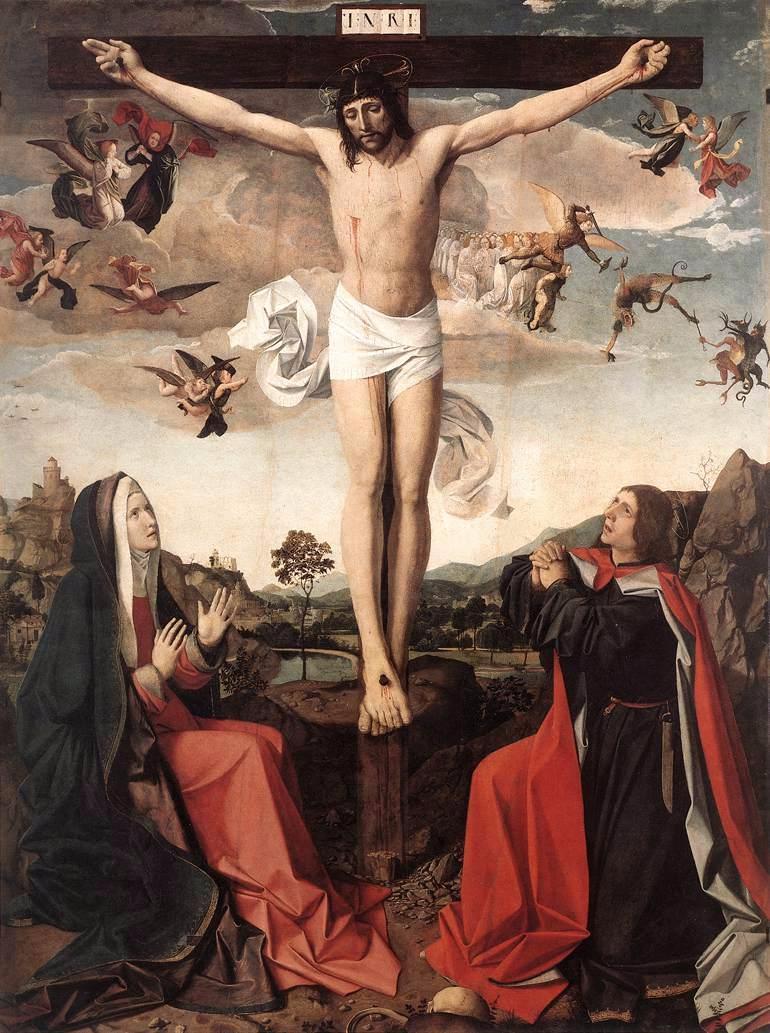
Face of Christ in the Passion

In Lent we prepare for the celebration of our redemption by Christ’s death and resurrection. In this meditation we consider how:

  • We can accompany Our Lord in his forty days of fasting and prayer in the desert by our own greater effort in prayer, fasting and almsgiving.
  • Lent is a time for conversion, of starting anew in our spiritual struggle.
  • As Christ loved us to the end by dying on the cross for us, we should be generous in our Lenten discipline.
  • When we live Lent well, we have a true springtime, new life and growth, in our spiritual life

Sowers of peace

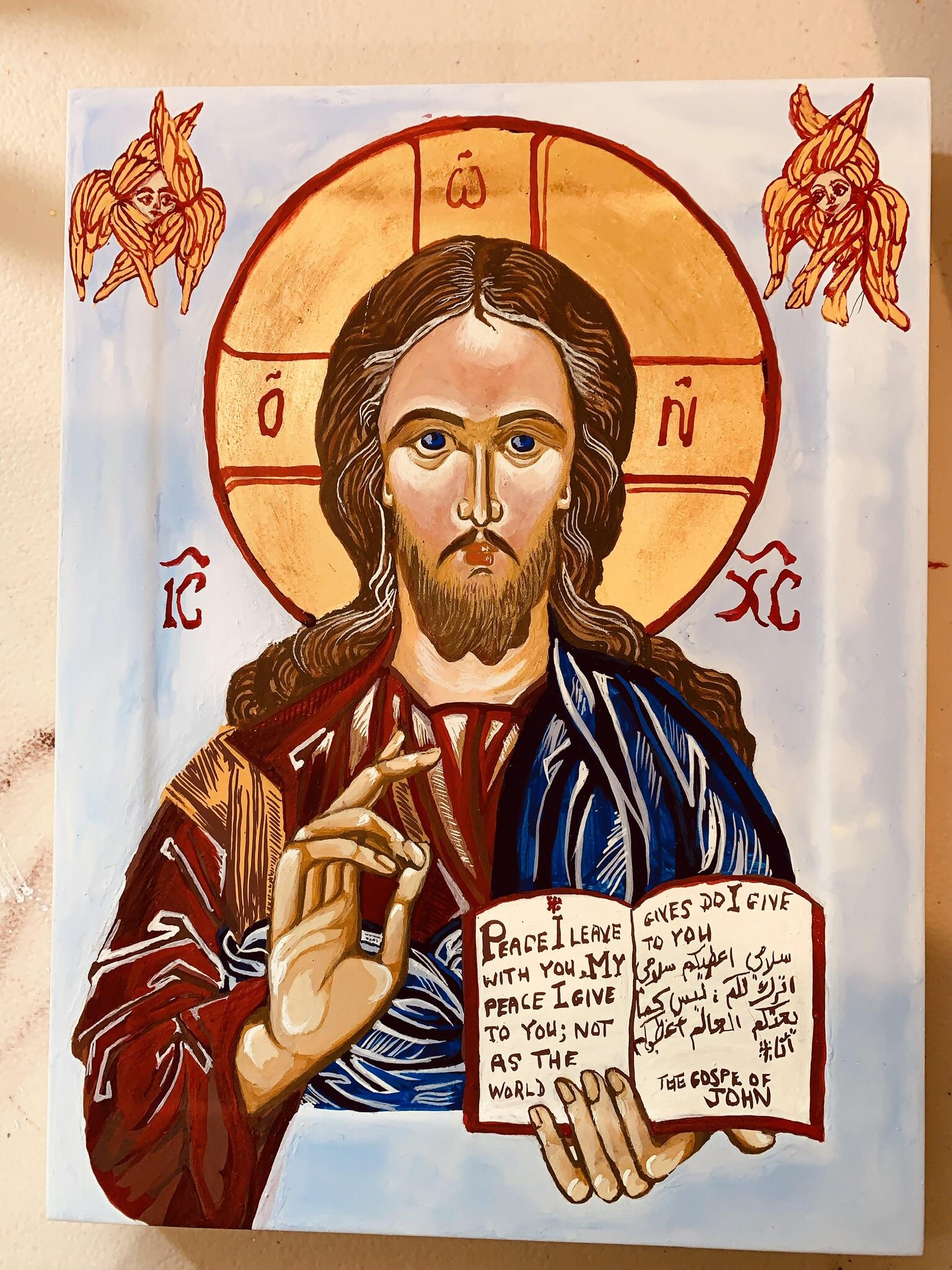
Our Lord, Jesus Christ is the Prince of Peace.

The prophet Isaiah announced the coming of one who would be called Prince of Peace.  When Christ was born in Bethlehem,  the angels announced peace on earth, and Christ later told the apostles that he came to bring peace such as the world cannot give. But when we look around us, we see a great lack of peace. In this meditation, we use texts of Scripture, St Gregory of Nyssa, St John Paul II and St Josemaria Escriva to consider:

    • How the Scriptures speak repeatedly of peace
    • What peace is
    • How peace begins in the human heart
    • How we can grow in peace by loving God more and following the promptings of the Holy Spirit
    • How we can spread peace around us, in our family, our workplace and in society

The first Christmas gift

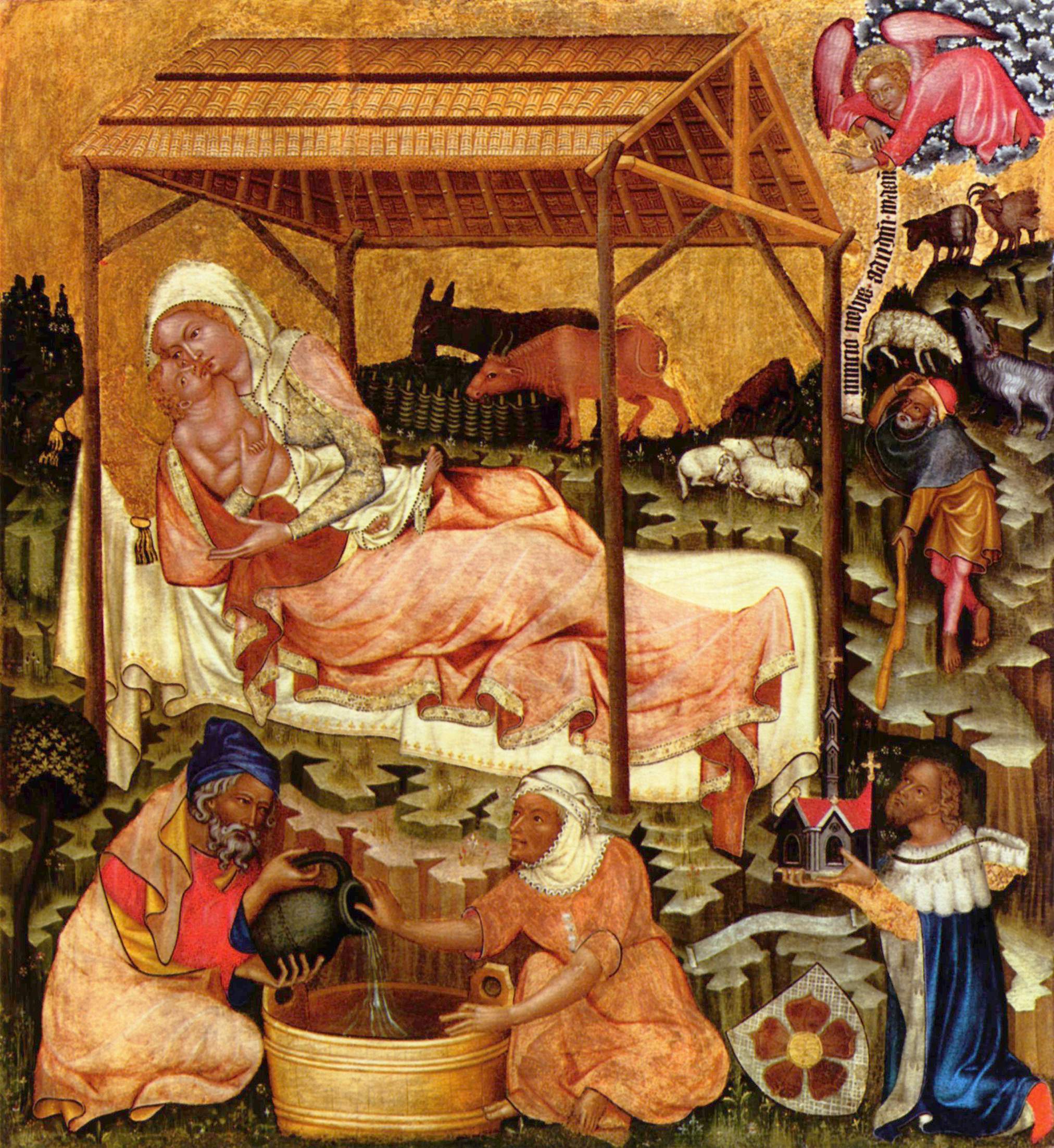
Christmas is a time for giving gifts. The wise men brought gifts to the baby Jesus, but the first Christmas gift was Jesus himself, a gift from the Father to all of mankind. In this meditation we use texts of Scripture to consider how we can live Advent like Our Lady and St Joseph, the shepherds and the wise men, to show our gratitude to Jesus by:

  • Growing in our life of prayer in all its forms, especially through meditation on the Scripture passages that refer to Christ’s birth
  • Living a life of sacrifice, as has been traditional in Advent, to clean out the stable of our soul and make it welcome to receive Jesus
  • Giving of ourselves to those around us, for what we do to them we do to Jesus
  • Preparing well for four comings of Jesus: at Christmas 2000 years ago, at the end of time, everyday when he comes into our life in different ways, and when he comes to call us to eternal life with him.

Devotion to the Holy Souls

The holy souls in purgatory (the church suffering) are part of the communion of saints - Christ's Mystical Body

The Holy Souls in Purgatory

The Church dedicates the month of November to praying for the holy souls in Purgatory. This should be a constant devotion for us, since through the Communion of Saints we can help these souls and they can intercede for us. In this meditation we use texts of Scripture, the Catechism of the Catholic Church and saints to consider:

  • Why there should be a state of purification of the soul after death
  • The pains experienced by the holy souls, along with the love and joy they experience
  • That Purgatory is a manifestation of God’s holiness, justice and mercy
  • Accounts of souls in Purgatory who have communicated with people on earth
  • How from the earliest days the Church has prayed for the faithful departed
  • The benefits for the holy souls and for ourselves of devotion to the souls in Purgatory

Love for the Church

Our love for the church

As we love our mothers, so we should naturally love our holy mother the Church. But it can sometimes be difficult to do so, especially when we see the human failings of members of the Church and the many difficulties she faces at the present time. In this meditation we use texts of Scripture, Fathers of the Church, Popes and St Josemaria Escriva to consider how:

  • To love Jesus Christ is to love the Church, which is his Mystical Body
  • The Church is truly our spiritual mother
  • The Church is not a merely human institution but the Communion of Saints, with Christ as its head and the Holy Spirit as its soul
  • The very survival of the Church to this day in spite of all the problems it has faced throughout the centuries can fill us with faith
  • From the time of the apostles, there have always been human failings in members of the Church
  • We should love the Church and pray very much for the Pope, the bishops and all in the Church.

Devotion to the angels

Here is another of my question-and-answer articles, on the topic of devotion to the angels. I hope you enjoy it.

We don’t hear much about angels anymore, even though the Church celebrates two feasts in their honour. Is devotion to the angels still important? 

Devotion to the angels is very important. It has always been. As you say, the Church celebrates two feasts in their honour: on September 29 the feast of the Archangels Michael, Gabriel and Raphael, and on October 2 the feast of the Guardian Angels. Those feasts can be an occasion for priests to preach on the importance of the angels in our lives, for parents to teach their children about them, and for all of us to grow in devotion to them.

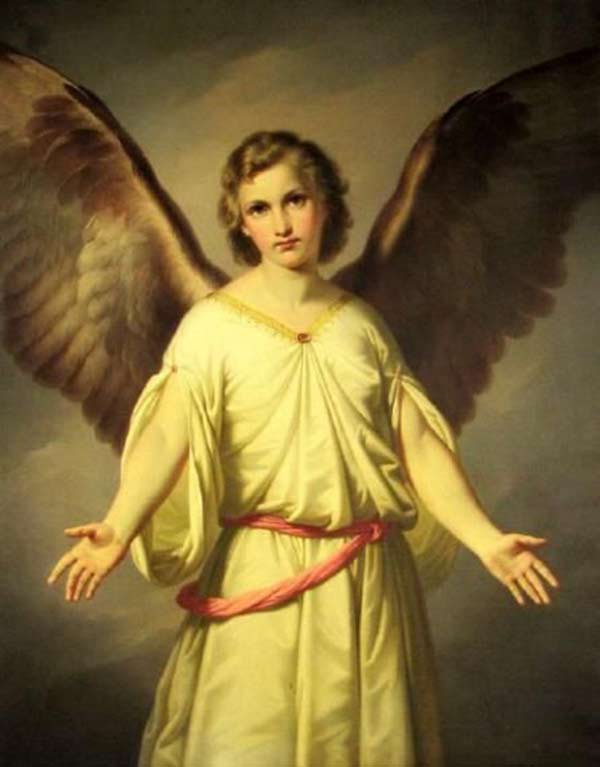
The archangel GabrielThe angels appear throughout the Scriptures. To mention just a few, already in the first book of the Bible, angels are placed at the entrance of the garden of Eden to guard the tree of life (Gen 3:24), and an angel appears to Jacob, telling him to return to the land of his birth (cf. Gen 31:11-13). Also in the Old Testament, an angel appears to Manoah’s wife announcing the birth of Samson (cf. Judg 13:3) and the Archangel Raphael accompanies the young Tobias on a journey in the book of Tobit. In the New Testament an angel appears to St Joseph in a dream to tell him that the child Mary is carrying is of the Holy Spirit (cf. Mt 1:20); and the Archangel Gabriel appears both to Zechariah to announce the birth of John the Baptist (cf. Lk 1:11) and to Mary to announce the birth of Jesus (cf. Lk 1:26-31). Finally, in the last book of the Bible, the book of Revelation, angels appear numerous times giving glory to God.

Angels are real, and they were created by God to give him glory in heaven as well as to perform various roles on earth, including looking after human beings as guardian angels. I don’t know how much the average person hears about angels these days, but I suspect, as you say, that it is not much. This is sad. Why is devotion to the angels so important?

A first reason is quite general but fundamental. In recent times mankind has tended to focus more and more on the visible world, on the here below, and to forget the spiritual, the supernatural. But it is in the realm of the spiritual where God himself is, and where our ultimate destiny, heaven, is. And it is in that realm too where angels, who are invisible, are. Remembering the angels and having devotion to them thus helps to lift our thoughts above and to be heavenly minded, not earthly minded (cf. Col 3:1-2).

What is more, all the angels, not only the guardian angels, are with us in the Church. St Thomas Aquinas writes: “It is manifest that both men and angels are ordained to one end, which is the glory of the divine fruition. Hence the Mystical Body of the Church consists not only of men but also of angels” (STh III, q. 8). So angels too form part of the Church. We can call on them to help us be the saints God wants us to be and so build up the body of Christ, the Church, helping others too to grow in holiness.

We should not forget either that the angels constantly adore Our Lord in the Tabernacle, where Christ is truly present. When we go into a church we can ask the angels to help us adore Our Lord as they do. We don’t see the angels but they are truly there, day and night. When we can’t be there ourselves, we can ask them to keep Our Lord company on our behalf. And, of course, during the celebration of Mass, the angels surround Our Lord when he becomes present in the host and in the chalice. Awareness of this helps us to be more supernatural, more spiritually minded.

Awareness of the existence of our guardian angel is also very helpful. When we are tempted to sin or are in any difficult set of circumstances we can ask our angel to help us get through the situation successfully. And being aware that our angel is always there watching us can be an added help to avoid doing things that we wouldn’t want our angel to see. St John Vianney, the Curé of Ars, writes: “If we did like St Remigius, we would never be angry. See, this saint, being questioned by a Father of the desert how he managed to be always in an even temper, replied: ‘I often consider that my guardian angel is always by my side’”. He also says: “The devil writes down our sins, our guardian angel all our merits. Labour so that guardian angel’s book may be full, and the devil’s empty.”

So yes, devotion to the angels is very important. Let us do all we can to foster it.

Bringing our friends to Christ

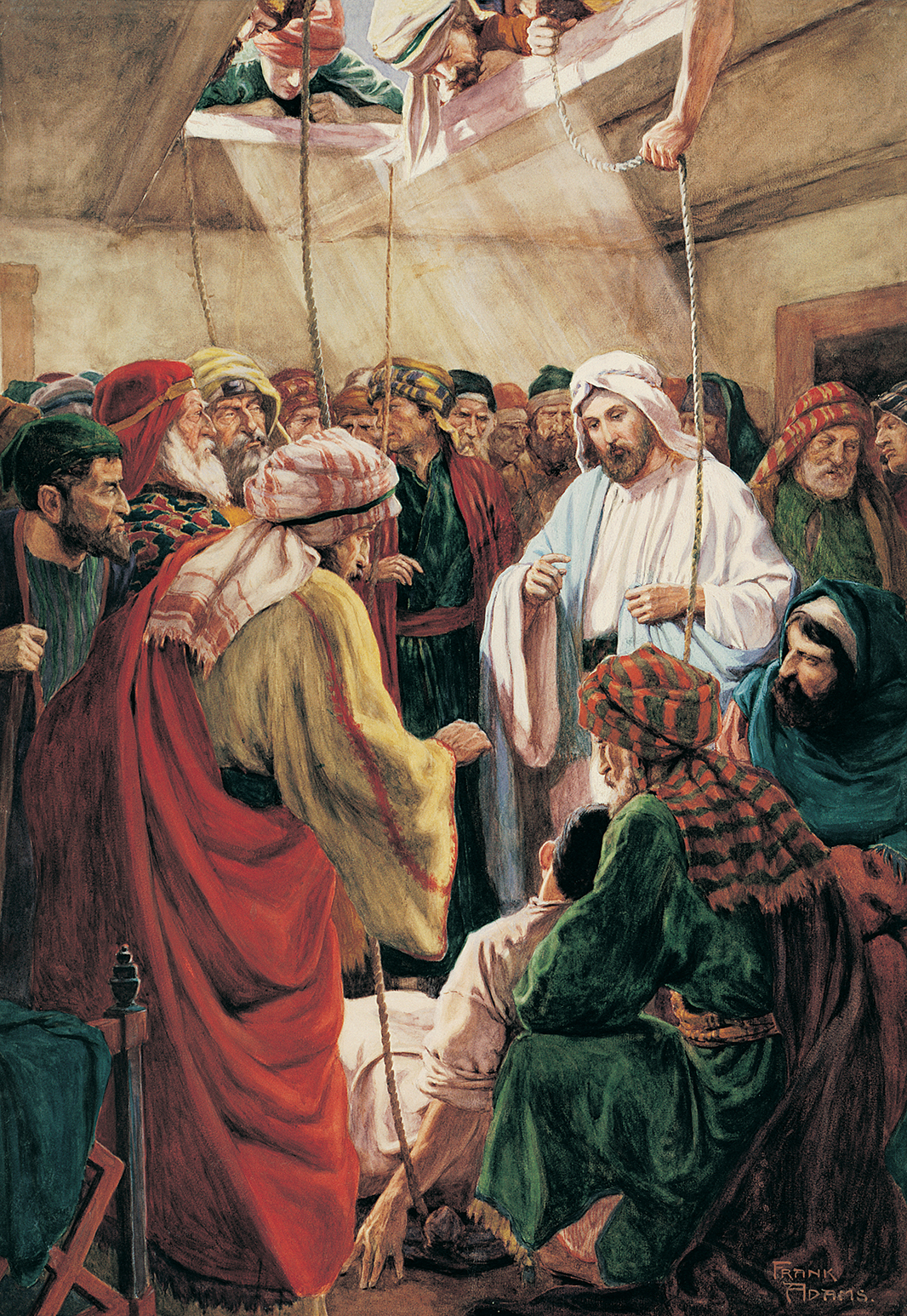
A paralytic is lowered through the roof by his friends for Jesus to cure him.

In his Gospel St Luke relates how the friends of a paralytic went to great lengths to take him to Christ, going onto the roof of the house and lowering him down through the opening they had made. We too should do all we can to bring our friends and relatives to Christ. In this meditation we use texts of Scripture, St John Chrysostom and St Josemaria to consider how:

  • Christ wants all to be saved but he needs us to help him
  • For some of our friends and relatives, we are the only one in a position to help them find Christ
  • We can help them in various ways: explaining how important the faith is for us and for them, giving them an article or book to read, inviting them to a talk and, always, praying for them

What is synodality?

Here is another of my recent answers in the Catholic Weekly to a question posed by a reader.

With the Synod of Bishops meeting on synodality fast approaching, I have been speaking with a group of friends and none of us is clear as to what the term synodality actually means. Can you help us?

To answer your question I will draw mainly on the International Theological Commission’s document “Synodality in the life and mission of the Church”, issued with the approval of Pope Francis on 2 March 2018.

The word “synod”, or synodos in Greek, is an ancient word in the tradition of the Church. It is composed of the preposition syn, meaning “with”, and the noun odos, or “path”. It thus means the path along which the People of God walk together.  writes that the Church is a “name standing for ‘walking together’” (Exp. In Psalm., 149, 1). In the early second century, St Ignatius of Antioch applied the term to the various local Churches, which are synodoi, or companions on the journey of the one universal Church (Ad Ephesios IX, 2).
From the beginning of the Church, the word “synod” was also applied to Church gatherings at various levels, both local and universal. Thus, one could speak of the Synod of Toledo, or the Synod of Nicaea. Here, as the document says, the word “synod” means the same as “council”. Since the Second Vatican Council, the word “synod” has been applied especially to the periodic gatherings of a selection of bishops from all over the world to meet with the Pope and advise him on certain issues. The Synod of Bishops which is to meet in October is one of these.

The word “synodality” is what the document calls a “neologism”, or newly-coined word. It is derived from the adjective “synodal” and has come to mean something like “walking together”. It is considered to be a constitutive dimension of the Church. While the Second Vatican Council did not use the word, the concept of synodality was at the heart of the Council’s teaching, coming to mean much the same as communion, or union with God the Blessed Trinity and union with others in the Church.

Synodality is also at the heart of the ecumenical commitment of the Church, because it represents an invitation to walk together on the path towards full communion with people of other faiths and because, when understood correctly, it offers a way of understanding the Church where legitimate differences find room in an exchange of gifts in the light of truth.

By way of summary, the document says that in the communion of the people of God with the Blessed Trinity “can be found the source, the form and the scope of synodality, inasmuch as it expresses the specific modus vivendi et operandi of the People of God in the responsible and ordered participation of all its members in discerning and putting into practice ways of fulfilling its mission.” (n. 43). In a nutshell, it means everyone working together toward a common goal.

The Church journeys together with Christ towards the end of time and towards the ends of the earth, in the union of the local Churches with each other and with the Church of Rome. The Church’s synodality is lived out especially in the service of her evangelising mission, with all the baptised involved as missionary disciples. This missionary aspect of synodality is emphasised numerous times in the document.

Consulting and listening to the faithful, including the lay faithful, who make up a great majority of the Church, before the hierarchy makes decisions, is an essential aspect of the synodal process. Nonetheless, while the hierarchy should listen to the faithful before making decisions, the task of making the decisions belongs to the pastors. As the document says, “Working things out is a synodal task; decision is a ministerial responsibility” (n. 69). This process should take place at all levels of the Church: local, regional and universal. And it should always be faithful to the deposit of faith received from Christ and respectful of the authority of pastors.

Thus, while pastors should listen to others before making decisions, synodality is not a democratic free-for-all where everyone has an equal say in decision-making. Pope Francis said as much in his homily on Pentecost Sunday 2023: “And the Synod now taking place is – and should be – a journey in accordance with the Spirit, not a Parliament for demanding rights and claiming needs in accordance with the agenda of the world, nor an occasion for following wherever the wind is blowing, but the opportunity to be docile to the breath of the Spirit.”