With the occasion of the feast of the Exaltation of the Holy Cross we consider how Christ invites us to take up our own cross and follow him. We cannot be soft and comfort seeking if we want to be Christ’s followers. Rather we must be strong willed in order to be effective in bringing Christ to others. In this meditation we consider:
Martha and Mary

Here we see Mary and Martha serving Jesus. We note Martha holding a basket with bread and Mary sitting at His feet listening.
We are all familiar with the account of Mary and Martha, with Mary sitting at Our Lord’s feet while her sister Martha prepares the meal. We too would love to sit and listen to Jesus but we are busy about many things like Martha. In this meditation we see how our life is essentially like that of Martha, but in order to be a good Martha we must also be Mary. Using many texts of St Josemaria Escriva‘s book Furrow, we consider:
- The Second Vatican Council’s teaching that the role of the Christian lay person is to engage in the affairs of the world and order them according to the law of God.
- We cannot waste our time but should be busy like Martha.
- We should do what God is asking of us, not what we feel like.
- We should work well, like Martha.
- We should do everything for Jesus, like Martha.
- In order to do this we must spend some time each day in prayer like Mary.
Witnesses for Christ
Christ has called all the baptised and sent us out to be his witnesses in the world, to bear fruit that will abide. If we are to fulfill this mission we must be branches very much united to the vine. We do this through our life of prayer, following a daily plan. In this meditation we will consider:
- Our calling to be witnesses for Christ
- How we must be branches united to the vine
- The need for a daily plan of spiritual activities, just as we have a daily plan of meals, work, relaxation and sleep
- The principal activities of this plan
The Good Samaritan
In this Jubilee Year of Mercy the parable of the Good Samaritan has much to tell us. It offers food for thought on how we can be a Good Samaritan to those around us. In this meditation we will consider:
- The question of the lawyer to Jesus on what he must do to inherit eternal life and the importance of the question for everyone
- How love for God and love for our neighbour are related
- How our neighbour is everyone around us, no matter what their religion, race or nationality
- The example of saints like Josemaria Escriva and Mother Teresa of Calcutta
- How we can be the Good Samaritan in our family and with strangers
The heart of Mary
When the soldier pierced the heart of Christ as he hung on the cross, the spear pierced the heart of Mary too. Her heart and his were one. In this meditation we consider how:
- Mary pondered the mysteries of Christ in her heart
- Her heart and his were united throughout their lives
- Mary suffered intensely with Jesus at Calvary
- St Bernard considered Mary to be truly a martyr
- Mary loves us as she loves Jesus
Called to holiness
Many think only a few extraordinary people are called to sanctity and that it is sufficient for the rest to limit themselves to being good. But God has loved everyone and he wants all to love him with their whole heart, soul, mind and strength. All are called to sanctity and sanctity is within the reach of all. In this meditation we will consider how:
- God has called each and everyone from all eternity to fulfill a mission
- Christ loves everyone and he wants all to love him in return
- To bear fruit we must be branches very united to the vine who is Christ
- We are united to Christ through prayer, penance, the sacraments and fulfilling his will
Life of Prayer
Do not judge
We all tend to judge others, to criticise them, find fault and be judgmental. The encounter of Our Lord with the woman caught in adultery has much to teach us about how to be less quick to judge. In this meditation we will consider:
- Our Lord’s encounter with the woman caught in adultery
- Reasons why we tend to be judgmental
- What we can do to be less ready to judge and more ready to forgive
- Words of St Josemaria Escriva from his book The Way
The Prodigal Son
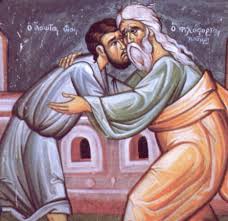
One of the most beloved parables is that of the Prodigal Son, who leaves his father’s home for a life of sin, then repents and returns to a warm embrace and a big celebration. Jesus gives us the parable to tell us that if we are sorry for our sins, God our merciful Father will always forgive us, no matter what we have done. In this meditation we consider:
- The story of the Prodigal Son
- Why Christ gave us the sacrament of Penance
- Why telling our sins to a priest corresponds to our human nature
- Ten benefits of going to confession
- How regular confession helps us grow in holiness
- What Pope Francis says about the importance of confession
- How we should help others make use of this sacrament
Meditations are now on iTunes
After much time and the effort of a friend, I am happy to report that all the meditations on my blog have been accepted and are now available on iTunes.
In order to access and download them onto your device, you first need to download iTunes from the iTunes site. Then you can put John Flader into your search and over 50 meditations will appear, to be downloaded as you wish.
I wish you a happy (truly) and fruitful Lent.