The Prodigal Son

Prodigal Son 2


One of the most beloved parables is that of the Prodigal Son, who leaves his father’s home for a life of sin, then repents and returns to a warm embrace and a big celebration. Jesus gives us the parable to tell us that if we are sorry for our sins, God our merciful Father will always forgive us, no matter what we have done. In this meditation we consider:

  • The story of the Prodigal Son
  • Why Christ gave us the sacrament of Penance
  • Why telling our sins to a priest corresponds to our human nature
  • Ten benefits of going to confession
  • How regular confession helps us grow in holiness
  • What Pope Francis says about the importance of confession
  • How we should help others make use of this sacrament

Meditations are now on iTunes

After much time and the effort of a friend, I am happy to report that all the meditations on my blog have been accepted and are now available on iTunes.

In order to access and download them onto your device, you first need to download iTunes from the iTunes site. Then you can put John Flader into your search and over 50 meditations will appear, to be downloaded as you wish.

I wish you a happy (truly) and fruitful Lent.

Meditation “Blessed the merciful”

The parable of the prodigal son is mercy perosnified.

A great example of mercy is the parable of the prodigal son.

Now that the Jubilee Year of Mercy proclaimed by Pope Francis has begun, it is good to meditate on this important virtue so that we can discover new and better ways to live it out in our daily lives. In this meditation we will consider:

  • How God is merciful to us
  • What the Scriptures say about mercy
  • The nature of mercy
  • Why it is so important that we live mercy ourselves
  • The seven corporal works of mercy
  • The seven spiritual works of mercy

Meditation “Preparing for Christmas”

Christmas is a celebration of the birth of our saviour.

Every nativity scene you look at always has Mary, our holy mother with her son and St Joseph, her spouse.

Now that we are in Advent, we want to prepare well for Christmas. A good way to do this is by the hand of Our Lady. After all, she too prepared for the birth of Christ. In this meditation we consider nine lessons Our Lady gives us about how to prepare for this great feast:


  • Avoiding sin and going to confession
  • Docility to the will of God
  • Charity with others
  • Spreading joy
  • Presence of God
  • Not complaining about hardship
  • Penance
  • Contemplation and meditation
  • Bringing Christ to others

Meditation: Giving thanks for everything

We are accustomed to ask God for many favours but how often do we remember to thank him for the gifts he has given us? Are we perhaps like the nine lepers who were healed but did not return to thank Jesus? In this meditation we consider:

  • How much Jesus appreciates that the Samaritan leper returned to give thanks
  • Jesus himself gives thanks to the Father
  • St Paul exhorts the early Christians to give thanks always
  • Everything we have is a gift from God
  • We should give thanks for such general gifts as creation, the Incarnation, Redemption, the Church, the Sacraments
  • We should thank God for our life, our family, our health, our talents, our food, clothing and shelter, the good things we have done
  • We should thank God for the unknown blessings and even the crosses God shares with us

Meditation – Love for the Rosary

In 1883, Pope Leo XIII declared October the month of the Rosary. The Holy Rosary is a traditional prayer, going back at least a thousand years. It is a prayer we should say often and well. In this meditation we consider:

  • How the Rosary came to be
  • The recommendation of the Rosary by popes and saints
  • Why the Rosary is such a powerful prayer
  • Why the Rosary is such a rich prayer
  • The importance of the family Rosary
  • How we can say it better

What is a Synod of Bishops?

With the Synod of Bishops now meeting in Rome from October 4-25, many people are asking what a Synod is and whether it can change Catholic teaching, for example on giving Communion to people who have been divorced and are now remarried outside the Church. Here is an answer to those questions, published recently in Australian Catholic newspapers.

Can a synod change Church doctrine?

Some of my friends have expressed the belief that the October synod of bishops in Rome will allow divorced and remarried Catholics to receive Communion. Is this possible? Also, what exactly is a synod?

 The short answer to your first question is no, it is not possible. The answer to your second question will explain why.

The synod of bishops is something relatively new in the Church, having been instituted by Pope Paul VI on 15 September 1965 in the Motu Proprio Apostolica Solicitudo. A month and a half later the Second Vatican Council’s Decree Christus Dominus on the Pastoral Office of Bishops spoke of synods and referred to Pope Paul’s document in a footnote (cf. CD, n. 5).

A series of subsequent documents gave norms for synods and finally the Code of Canon Law of 1983 summarised them in canons 342-348. Canon 342 tells us what a synod is: “The synod of bishops is a group of bishops selected from different parts of the world, who meet together at specified times to promote the close relationship between the Roman Pontiff and the bishops. These bishops, by their counsel, assist the Roman Pontiff in the defence and development of faith and morals and in the preservation and strengthening of ecclesiastical discipline.” As this canon says, the bishops in a synod assist the Pope “by their counsel” in his teaching role. They do not teach in their own right.

In the following canon we find a further answer to your question: “The function of the synod of Bishops is to discuss the matters proposed to it and set forth recommendations. It is not its function to settle matters or to draw up decrees, unless the Roman Pontiff has given it deliberative power in certain cases; in this event, it rests with the Roman Pontiff to ratify the decisions of the synod” (Can. 343). Again, the bishops’ role is to recommend, not to teach.

This gathering of bishops from all over the world is convened by the Pope to discuss the proposed topic. Some of the bishops are chosen by their respective bishops’ conferences, some attend because of the office they hold in the Church, and others are nominated by the Pope. Each bishop is given an opportunity to speak for a short, specified time on any aspect of the topic he chooses. The bishops also break up into small groups, normally according to their respective languages, to discuss the question. At the end of the synod they vote on a series of propositions which reflect their views, and these are given to the Holy Father for his consideration.

After the synod some of the bishops who took part are selected to prepare a draft of a document that the Pope might use in preparing his own document on the topic. This document, customarily in the form of an Apostolic Exhortation, is issued by the Pope himself and is a form of ordinary papal magisterium.

In recent times synods have been held approximately every three years. The last one, in 2012, was on the theme of the new evangelisation and was followed by Pope Francis’ Apostolic Exhortation Evangelii gaudium in 2013. The one before that on the Word of God was held in 2008 and was followed by Pope Benedict XVI’s Apostolic Exhortation Verbum Domini in 2010.

The present synod will be the fourteenth ordinary general assembly of the synod of bishops. There have also been extraordinary general assemblies, like the one on the family last year to prepare for the present synod, and also special general assemblies, like those of the bishops of the larger regions of the world to prepare for the Jubilee Year 2000.

It should be remembered that the present ordinary synod on the family is not the first one on this topic. The first one was held in 1980 and was followed by Pope St John Paul II’s Apostolic Exhortation Familiaris consortio. In that document Pope John Paul made clear that those who are divorced and remarried civilly are to be welcomed into the life of the Church but they may not be admitted to Eucharistic Communion (cf. n. 84). Pope Francis will not change that teaching.

What we should all do is pray very much for the fruits of this important synod, which affects all of us very directly.

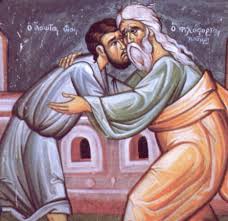
Meditation “Sacrament of Mercy”

One of the great treasures of the Church, one which at the same time is sadly little used, is the sacrament of Penance, given to the Church by Christ on the very evening of his Resurrection. In this meditation we consider:

  • The mercy of God as seen in the parable of the Prodigal Son
  • Christ’s institution of the sacrament on Easter Sunday
  • Why the sacrament of Penance responds to deep seated human needs
  • The many benefits we receive in the sacrament
  • Why we should go to confession regularly
  • How we should take others to this sacrament

Meditation “As I have loved you”

Christ gave us a new commandment to love one another as he has loved us. It is not always easy to do this but it is very important to try, so that we spread the love of Christ in the world. In this meditation we consider various ways we can do this:

  • Spirit of service
  • Sacrifice
  • Compassion
  • Affection
  • Love for our “enemies”
  • Forgiveness

Meditation “The treasure of time”

We have only one life to live and we must not waste it. It is important to make good use of the time God has given us so that we achieve what he is asking of us and we store up a great treasure in heaven. In this meditation we consider:

  • Jesus’ own example of being always on the move
  • The importance of using our time well
  • Thoughts of St Josemaria in his homily “Time is a Treasure”
  • Some dangers to avoid
  • Tips for making better use of our time