Tag Archives: St Josemaria Escriva

Putting Christ back in Christmas

Nativity scene icon

For more and more people, Christmas is about giving gifts, bringing the family together, having parties and going on holidays. But it is not about the birth of Christ. In this meditation we pray about how we can put Christ in the centre of our life and grow in friendship with him. We consider:

  • Who Christ really is
  • Why he became flesh
  • How he came to be born in Bethlehem
  • What we learn from his birth in a stable
  • How we can grow in love for him through prayer, the Mass, reading the Scriptures, the sacraments, penance and service to others

Knowing how to love

Jesus blessing the children.


St Josemaria Escriva called himself a man who knew how to love. Indeed, his great love for God overflowed into love for his fellow man. We should all be people who know how to love. In this meditation we pray about how:


  • We are all called to love God because he loved us first
  • Only if we truly love God will we be able to love our fellow man
  • We can grow in love for God in the same way that St Josemaria did: by spending time with him in prayer in its various forms, in Mass and Holy Communion, reading of Scripture,  spiritual reading, etc.
  • We love God with the same heart with which we love others
  • Our love for others should include our effort to help them draw closer to God

Love one another

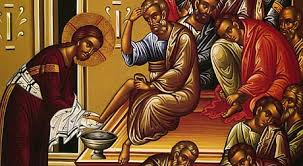
Christ washing the feet of his disciples

Our Lord, Jesus Christ, washing the feet of his disciples, the night before he suffered and died on the cross.


Before beginning his Passion, Christ washed the feet of his disciples and gave us the new commandment to love one another as he has loved us. In this meditation, using texts from Scripture and St Josemaria we consider how:

  • Christ poured himself out in love for others, loving them to the end by his death on the Cross
  • God has loved us first and so the more we love him the easier it will be to love others
  • Love begins in the family, with those closest to us
  • We should learn to spend time, to listen, to be kind, to forgive
  • Mother Teresa of Calcutta teaches us how to love
  • We should love even our enemies
  • We can change our world for the better by building a civilization of love

Jesus and the Eucharist

Our Lord, Jesus Christ, depicted with the Holy Eucharist, a sacrament He founded during His Last Supper.

In the words of St Josemaria Escriva, the Eucharist should be the “centre and root” of the spiritual life. After all, the Eucharist is Jesus himself, who gives himself to us as the nourishment of our soul and who waits for us in the “prison of love”, the tabernacle. In this meditation we pray about how we can grow in love for Jesus in the Eucharist, using words that Catalina Rivas puts on his lips in her book The Passion, published by the Apostolate of the New Evangelization. We consider:

  • Why Jesus washed the feet of the apostles before instituting the Eucharist
  • The many fruits that come from receiving Jesus well in Holy Communion
  • The sorrow of Jesus when people receive him unworthily
  • The story of a Chinese girl who was killed  for her love of the Eucharist
  • How we can grow in love for Jesus by keeping him company in the tabernacle

As a new year begins

new-calendar-year

The beginning of a new year is a good time to take stock and make plans and reslutions for the rest of the year.


As a new year begins it is good to stop and reflect on the past year and make resolutions for the one just beginning. In this meditation, following a custom of Blessed Alvaro del Portillo, we:

  • Give thanks for the blessings of the past year, including the crosses God has sent us
  • Ask pardon for our many failings
  • Ask God to help us carry out our new year’s resolutions to grow in holiness

Mary, teacher of faith

nativity-scene showing Jesus with Mary and Joseph

Mary and Joseph with the newly born infant, our Lord Jesus Christ.

Faith is one of the most important virtues and is always a gift from God. In this meditation we consider that:

  • Our Lady throughout her life teaches us how to live this virtue
  • We need faith both to believe in the truths revealed by God and also to believe that nothing is impossible with God
  • Faith helps us to know that God is with us in the trials of life
  • Faith gives meaning to life

Take up your cross

Christ carrying the Cross - Titian

Christ carrying the Cross – Titian

With the occasion of the feast of the Exaltation of the Holy Cross we consider how Christ invites us to take up our own cross and follow him. We cannot be soft and comfort seeking if we want to be Christ’s followers. Rather we must be strong willed  in order to be effective in bringing Christ to others. In this meditation we consider:

  • Christ’s exaltation on taking up his cross
  • His invitation to us follow him
  • The difficulties we face in the world, the flesh and the devil
  • The need to be strong willed and how we can grow in fortitude
  • The example of the Paralympians
  • Thoughts of St Josemaria in his books The Way and Furrow

Martha and Mary

Martha and Mary (Johannes_(Jan)_Vermeer)

Here we see Mary and Martha serving Jesus. We note Martha holding a basket with bread and Mary sitting at His feet listening.

We are all familiar with the account of Mary and Martha, with Mary sitting at Our Lord’s feet while her sister Martha prepares the meal. We too would love to sit and listen to Jesus but we are busy about many things like Martha. In this meditation we see how our life is essentially like that of Martha, but in order to be a good Martha we must also be Mary. Using many texts of St Josemaria Escriva‘s book Furrow, we consider:

  • The Second Vatican Council’s teaching that the role of the Christian lay person is to engage in the affairs of the world and order them according to the law of God.
  • We cannot waste our time but should be busy like Martha.
  • We should do what God is asking of us, not what we feel like.
  • We should work well, like Martha.
  • We should do everything for Jesus, like Martha.
  • In order to do this we must spend some time each day in prayer like Mary.

The Good Samaritan


The good Samaritan is a great example of how we  should treat our neighbour.

The parable of the Good Samaritan is a good example to follow in this Jubilee Year of Mercy


In this Jubilee Year of Mercy the parable of the Good Samaritan has much to tell us. It offers food for thought on how we can be a Good Samaritan to those around us. In this meditation we will consider:

  • The question of the lawyer to Jesus on what he must do to inherit eternal life and the importance of the question for everyone
  • How love for God and love for our neighbour are related
  • How our neighbour is everyone around us, no matter what their religion, race or nationality
  • The example of saints like Josemaria Escriva and Mother Teresa of Calcutta
  • How we can be the Good Samaritan in our family and with strangers

Called to holiness

Christ calling the apostles

We are all called to sanctity

Many  think only a few extraordinary people are called to sanctity and that it is sufficient for the rest to limit themselves to being good. But God has loved everyone and he wants all to love him with their whole heart, soul, mind and strength. All are called to sanctity and sanctity is within the reach of all. In this meditation we will consider how:

  • God has called each and everyone from all eternity to fulfill a mission
  • Christ loves everyone and he wants all to love him in return
  • To bear fruit we must be branches very united to the vine who is Christ
  • We are united to Christ through prayer, penance, the sacraments and fulfilling his will