Tag Archives: Catholic

One in the Communion of Saints

One of the most consoling truths of our faith is the reality of the Communion of Saints – the Church triumphant in heaven, the Church suffering in purgatory, and the Church militant on earth, all helping one another. In this meditation we use texts from Scripture, the Catechism, St Bernard, St Therese of Lisieux and St Josemaria to consider how:

  • The saints in heaven “fix the Church more firmly in holiness” by their example and prayer for us
  • We should have as the goal of our life to be with them for all eternity
  • The souls in purgatory suffer greatly and are exceedingly happy, relying on our prayer for them and interceding for us before God
  • In the Church militant, we are helped by the prayers of all in this Communion and we should feel responsible to help the others by our struggle for holiness and our prayers and works.

Love for the Blessed Trinity

We pray to the one God and we sometimes relate to each of the divine Persons individually but how often do we consider the great mystery of the three Persons in one God, the Blessed Trinity? In this meditation we consider:

  • An argument of Fray Luis of Granada on how God communicates his infinite goodness in the Blessed Trinity
  • The indwelling of the three Divine Persons in our soul
  • St Augustine’s search for God outside himself when God was present within him
  • St Elizabeth of the Trinity’s beautiful prayer to the Blessed Trinity
  • St Gregory of Nazianzus’ entrusting of the Profession of Faith to catechumens in Constantinople
  • Simple and practical ways we can be more aware of the Blessed Trinity in our lives

Sorrow of love

We all offend God many times a day, yet we do not express our sorrow as we should. In this meditation we pray about how we can foster true contrition, sorrow of love, for our sins and failings. We consider:

  • That God truly loves each of us more than all the mothers in the world put together
  • That our sins offend God more than do the sins of others, because he has given us more grace
  • The difference between perfect contrition and imperfect contrition
  • That St Josemaria Escriva calls the act of contrition the best devotion
  • That we should say many acts of contrition each day
  • How we can foster true contrition for our sins

Save us from the fires of hell


In this meditation we continue our journey through the Last Things,  praying today about hell. Hell is a reality and if we pray about it from time to time we are most unlikely to end up there. But God needs us to help others avoid hell too. In this meditation we use texts from Scripture, the Catechism of the Catholic Church, and the writings of saints like St John Vianney to consider:

  • Christ’s teaching on hell
  • God’s mercy and desire to save all souls
  • That those who go to hell choose it by failing to repent of their serious sins
  • The vision of hell seen by the three children at Fatima
  •  How we can avoid hell and help others to do so

Christ our Hope

Jesus Christ is our hope.

In the ups and downs of life there are many events which are not in our control, where we can only put our hope in God. In this meditation we use texts of Scripture and Pope Benedict XVI’s encyclical Saved by hope to put our life on a sure foundation. We consider that:

  • The foundation of our hope is God, who is always with us.
  • Our hope in God enables us to find peace and joy even amidst the uncertainties and sufferings of life.
  • The ultimate object of our hope is eternal life with God in heaven.
  • We can grow in hope through prayer in its various forms.
  • Mary, our Mother, is our hope: she brings us hope in the person of Jesus, she lives hope herself in many moments, and she intercedes powerfully for us in heaven.

Seeing Christ in others

Charity, as St Paul writes, is the greatest of the virtues (cf. 1 Cor 13: 13) but it is also one of the hardest to live. A big help in being more kind and generous is to see Christ in everyone around us. In this meditation we consider how:

  • Christ taught us that whatever we do to the least of our brethren we do to him (cf. Mt 25:40).
  • Our Lord showed us by his example how to love others and he gave us the New Commandment to love others as he has loved us (John 13:34).
  • We love others because God first loved us (cf. 1 John 4:19).
  • St Mother Teresa of Calcutta was truly exemplary in seeing Christ in the poorest of the poor.
  • Those closest to us have the first claim on our love.

The jigsaw puzzle of life

Jigsaw puzzle

God has a plan for all of us.

Life can be like a jigsaw puzzle. With each of our actions we put another piece in place and at the end of our life we will see the finished picture, the beautiful work of art God intended for us or the discordant one we have made by our failings. In this meditation we consider:

  • Living our life well is creating a true work of art, practising the art of holiness.
  • God has a plan for each moment of our life and doing what he wants is putting one more piece of the puzzle in its proper place.
  • While each action can seem unimportant in itself, it is very important in the overall picture of our life.
  • If we make a wrong choice, the finished picture will lack the harmony and beauty God wants for us.
  • The dark pieces – sickness, hardship, setbacks – are part of the beauty of God’s design for us.
  • Only at the end of our life will we see the finished picture we have made by our daily actions.

Sorrow for our sins

When on Good Friday Jesus looked at Peter after his three denials, Peter went out and wept bitterly. We too have offended Christ by our sins and we can learn from Peter to be sorry for them. In this meditation we consider:

  • The value of contemplating Jesus’ sorrowful face in order to be moved to true sorrow for our sins
  • The spirit of penance: contrition with the resolution to try not to sin again
  • The sacrament of penance: the importance of receiving this sacrament of mercy regularly and of helping others to do so
  • The acts of penance: why we need them and what we can do to make up for our sins

The road to Emmaus

The Road to Emmaus is one of the more renowned stories of Jesus's appearing to his disciples after His resurrection.

Jesus walked with two disciples on the Road to Emmaus. The latter did not recognise him until later when he sat with them and broke bread.


On the first Easter Sunday, two disciples left Jerusalem discouraged because the one they hoped would redeem Israel had died. On their way to Emmaus, Jesus walked beside them and explained the Scriptures to them. These two in some way represent all of us. We too have our times of trial, of worry, of discouragement, and Jesus seeks us out, even though we do not recognise him. In this meditation we consider how:


  • We all have our crosses, our difficulties in life, which can make us discouraged or worried
  • Jesus does not leave us alone but seeks us out and walks beside us
  • We find Jesus in our prayer and in others who are there to help us
  • We too can be there for others who are going through difficult times

Holy Week close to Christ

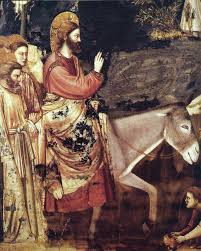
Holy week starts with Palm Sunday.

    Jesus enters Jerusalem and is well received, a feast we celebrate on Palm Sunday–the start of Holy Week.


In Holy Week we follow Christ from his triumphal entry into Jerusalem on Palm Sunday, through his institution of the Eucharist and the priesthood on Holy Thursday, to his passion and death on Good Friday and his resurrection on Easter Sunday. If we follow him closely throughout our life we will not abandon him as did the apostles and we will rise to eternal life with him when we die. In this meditation we consider how we should:

  • acknowledge our weakness and our possibility of denying Our Lord as did Peter
  • attend Mass often and receive Holy Communion well in order to strengthen our love for Jesus
  • stay awake in our prayer in order to draw ever closer to Christ
  • follow Christ closely, not at a distance, avoiding lukewarmness
  • avoid attachment to creature comforts and things in order to have our heart free to love God
  • take up our cross daily and follow our Lord in his passion
  • follow Christ closely throughout our life in order to rise with him to eternal life